QUANXTA Zero Series Embodied AI Platform Launched
X Square Robot launches the QUANXTA Zero Series, an integrated software-hardware platform for embodiment-free embodied data production.
The physical artificial intelligence pioneer capitalizes on a multi-round venture funding expansion to deploy modular, multi-sensor teleoperation and automated annotation pipelines for robot learning.
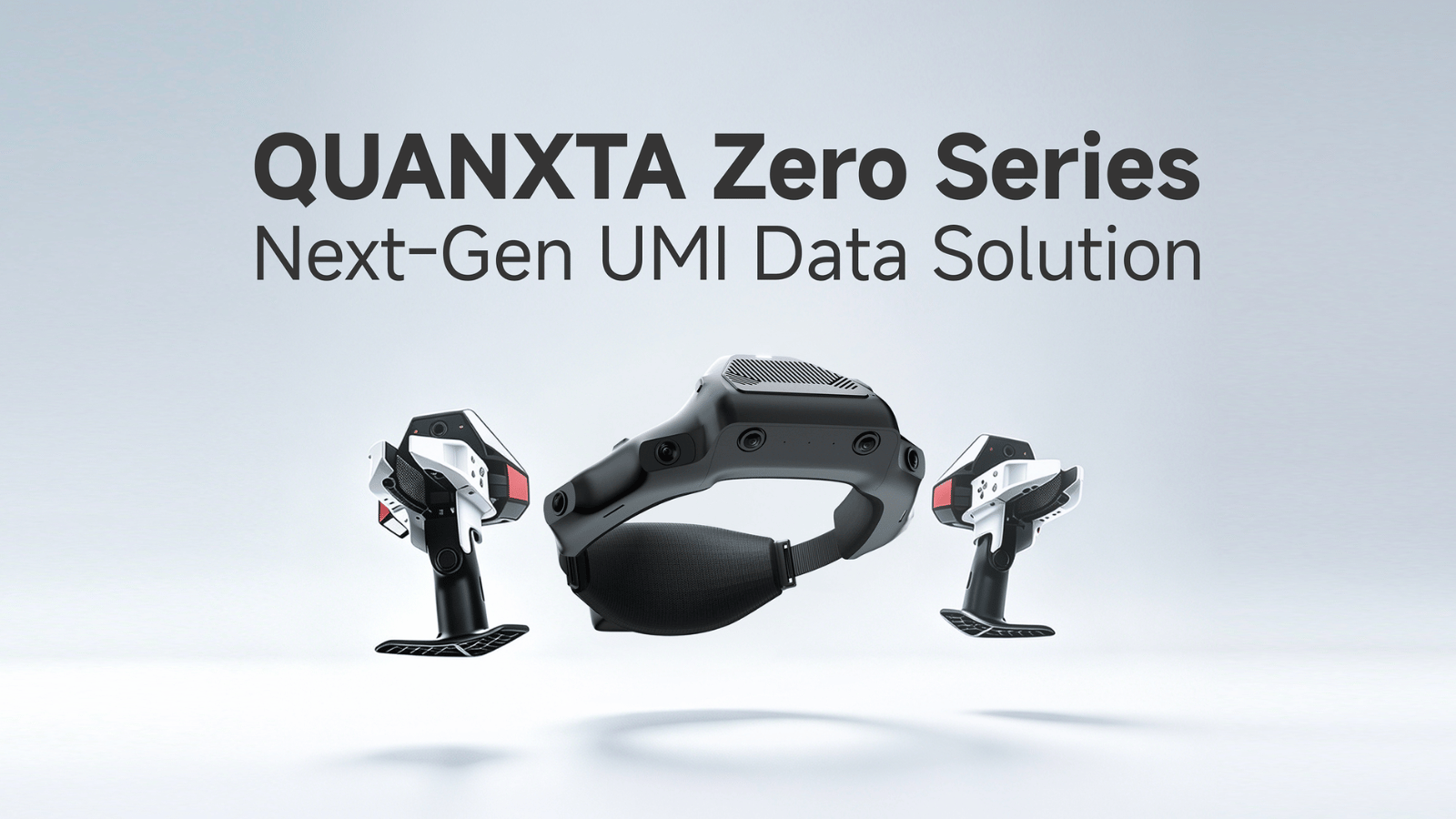
The X Square Robot QUANXTA Zero architecture entered global commercial availability on Monday as embodied AI software developer X Square Robot officially introduced its specialized software-hardware data manufacturing ecosystem. Engineered specifically to bypass the steep capital costs and fragmented training loops that traditionally restrict robot learning, the rollout delivers three distinct, embodiment-free teleoperation and egocentric capture devices alongside an industrial-grade automated cleaning pipeline. By converting raw physical human actions directly into high-fidelity, microsecond-aligned behavioral datasets, the Shenzhen-based enterprise intends to scale the data flywheels backing general-purpose robots, moving the enterprise past its recent 2.8 billion dollar corporate valuation milestone.
The corporate strategy behind the standalone data platform targets the acute data scarcity, collection latency, and variable demonstration qualities that bottleneck modern physical foundation models. Unlike digital language models that can digest trillions of existing text files scraped from open networks, robotic platforms require specialized, high-dimensional demonstrations mapping coordinate trajectories, visual occlusions, and tactile forces simultaneously. Relying on traditional, stationary robot arm teleoperation setups forces development teams to pay for expensive, redundant hardware rigs that struggle to capture whole-body mobile behaviors, generating fragmented datasets that fail to translate into robust downstream inference models.
The underlying technology configuration unifies multi-modal hardware tracking with an automated, cloud-hosted data refinement service to optimize the yield of trainable physical assets. The hardware layer utilizes high-precision Visual-Inertial Odometry (VIO) and virtual reality tracking configurations to record real-time human movements, mapping multi-view egocentric video arrays alongside continuous gripping pressures. This complex sensory ingestion is governed by tight hardware timers that restrict cross-sensor latency to less than 1ms, generating 100% frame-aligned data assets that allow diverse robot models to replay human physical tasks with perfect structural fidelity.
Accelerating Model Inference via the QUANXTA Zero Pipeline
The deployment of the integrated data production matrix marks a calculated evolution within the international robotics market, where machine learning teams shift away from custom hardware teleoperation toward hardware-agnostic behavioral scaling libraries. The system architecture partitions its physical collection tasks across three distinct device profiles: the streamlined QUANXTA Zero-G1 headband-and-gripper rig, the immersive Zero-G0 whole-body mobile VR tracking backpack, and the lightweight Zero-E0 six-camera egocentric perception array. Implementing this tiered hardware layout enables operators to complete nearly 100 successful task demonstrations per hour, achieving a 2.33x collection speed improvement over conventional robotic training methods.
Artificial intelligence research directors, corporate automation engineers, and critical manufacturing fleet managers track these automated ingestion benchmarks to compress model fine-tuning cycles and secure proprietary automation advantages. When an enterprise automation group relies on manual scripting or uncleaned, raw teleoperation logs to train robotic lines, an abundance of human pauses, mechanical tracking dropouts, and failed operational trajectories degrades model reliability. Deploying self-contained cleaning pipelines ensures that multimodal foundation models automatically segment task milestones and purge low-value trajectories, lifting final usable data yields up to 85%.
Industrial-Grade Privacy Infrastructure: To satisfy strict enterprise compliance and security standards, the QUANXTA Zero Data Pipeline incorporates automated face and sensitive-background blurring algorithms, dynamic watermarking layers, and short-term cryptographic access keys natively inside its cleaning workspace.
The automated data processing and curation pathways prioritize closed-loop evaluation loops to continuously flag weak operational scenarios and coordinate targeted secondary data acquisition drives. The system workspace orchestrates data tracking via the dedicated QUANXTA Zero App, which presents operators with an automated high-dimensional task marketplace, removing the need for manual script chopping or custom annotation entry. This integrated software architecture ensures that once data passes through human-AI confidence routing gates, verified demonstrations are committed directly to active model compilation pipelines, insulating the underlying system from human training errors.
Scaling Open Source Frameworks through Ecosystem Solidification
The operational scaling of the physical AI foundation platform is supported by targeted open-source distribution strategies, including the official release of the underlying XRZero-G0 software interface frameworks to the global developer community. By democratizing core robotic interface configurations and baseline asset tracking ratios, the hardware developer establishes its proprietary data pipeline as a cross-industry software standard for multi-modal machine learning. Providing international software houses with pre-validated data ingestion templates helps global engineering teams lower their initial technical deployment barriers, driving fast-paced collaborative innovation across the global robotics sector.
Securing General Purpose Utility Across Variable Industrial Frontiers
The long-term commercial viability of embodied AI systems will ultimately rely on how successfully engineering teams can translate human dexterity into repeatable, autonomous robotic labor models across complex, unstructured real-world environments. As multinational manufacturing rings confront widening labor deficits and logistics spaces require flexible, multi-axis fulfillment systems, the reliance on high-quality behavioral training assets will continue to dictate enterprise software capitalization. The systematic launch of the QUANXTA Zero Series establishes a calculated technological standard, demonstrating a unified model where high-fidelity telemetry capture and automated machine learning curation combine to unlock general-purpose robotics at scale.