Zendure Passport Travel Adapter Framework Debuts
Zendure launches the Passport Pro, an all-in-one universal travel adapter featuring a push-button resetting fuse and USB-C Power Delivery.
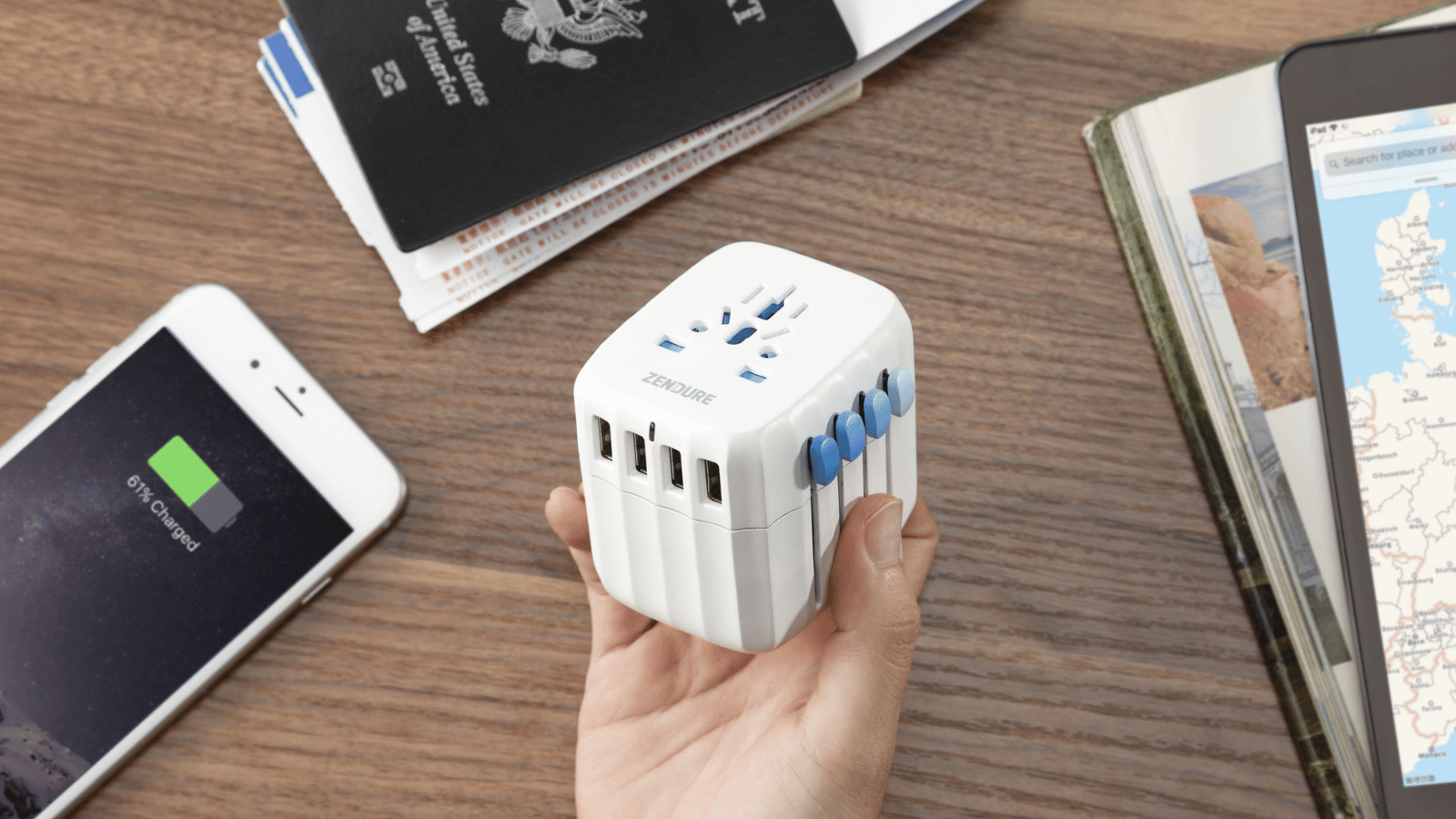
The Zendure Passport hardware framework expanded its consumer electronics footprint as mobile power equipment manufacturer Zendure announced the release of its specialized multi market traveling adapter, the Passport Pro. The mobile charging device combines an automated mechanical push-button resetting fuse with manual sliding plug configurations to facilitate cross-border electrical connectivity across varying regional grid parameters. By replacing single-use physical thermal fuses with a reusable, self-contained circuit-breaker toggle, the hardware platform intends to minimize device failure variables for international business travelers deploying high-draw electronics within unfamiliar technical infrastructure.The corporate product strategy addresses the operational vulnerability that traditionally compromises multi-nation power adapters when exposed to short-duration electrical overloads. Conventional high-output travel adapters frequently require manual component replacement or structural module disposal if a connected laptop charger or grooming appliance draws current in excess of baseline circuit thresholds. Integrating a physical mechanics layer that enables the internal circuit-breaker assembly to recover up to thousands of times without permanent degradation transforms the temporary travel accessory into a durable, multi-year utility block.The internal electrical framework balances multi-channel direct current distribution by combining a high-capacity Universal Serial Bus Type-C power delivery node alongside three traditional Type-A power ports. The main digital delivery node utilizes dedicated fast-charging communication protocols to adjust its relative voltage profiles dynamically, enabling rapid battery replenishment for modern smartphones and portable computing systems. This localized power management architecture functions simultaneously with a multi-region alternating current pass-through outlet, enabling the centralized terminal to deliver electricity to up to five separate external devices concurrently.
Enhancing Ground Security via the Zendure Passport Architecture
The architectural deployment of the updated layout prioritizes absolute structural protection by establishing a functional grounding connection to pass current directly to internal earth lines. Traditional all-in-one charging blocks frequently omit grounded metallic structural paths to reduce overall physical dimensions, restricting their safe application to completely plastic, ungrounded electronic appliances. Implementing an active ground configuration path allows corporate tech teams to operate high-capacity laptops and complex electronic instruments with metal structural chassis safely, minimizing static feedback and voltage leakage.Enterprise hardware procurement officers and corporate travel logistics managers monitor safety and dimensional variables to minimize resource loss during widespread multi-region field operations. When a field workforce must operate across diverse international environments, introducing unshielded or un-fused power junctions increases the likelihood of localized hardware fires or device motherboard destruction from volatile local grid configurations. Deploying compact, certified power terminals that include built-in toddler protection shields and shutter safety plates prevents accidental cross-pin conduction, maintaining structural security standards.
The physical tracking mechanics use an intuitive press-and-slide configuration layout that allows users to deploy regional prongs using one-handed operation. The mechanical lock array ensures that when a specific region plug style is extended, the remaining alternative configurations are physically locked inside the core housing structure to avoid accidental multi-prong deployment or short-circuit routing errors. This physical interlocking mechanism helps prevent hardware deformation when plugging the heavy charging hub into loose or worn out international wall sockets.Optimizing High Speed Charging Pipelines on Global Real Estate NetworksThe administrative management of mobile device power allocation relies on intelligent chipsets embedded within the direct current module to partition shared wattage limits safely based on live system load demands. When the high-output side connection is deployed independently, the terminal directs its entire computational power capacity to handle rapid charging sequences for power-hungry devices like tablets and ultrabooks. If secondary tracking terminals populate the bottom distribution nodes, the central controller automatically drops the main port down to secondary thresholds, distributing remaining capacities evenly to protect against thermal spikes.Consolidating Power Topologies Across International JurisdictionsThe long term commercial viability of boutique multi region consumer components depends heavily on how seamlessly hardware groups can pivot to meet evolving electronic standards, as demonstrated by the brand’s subsequent multi-generation progression into advanced Gallium Nitride architectures and large scale clean energy systems. As multinational organizations transition away from old multi-cable combinations toward unified, high-wattage charging ecosystems, the underlying physical blocks must deliver complete multi-continent compatibility without introducing extra transport baggage. The structured introduction of the Zendure Passport framework demonstrates a clear approach to stabilizing mobile productivity tools, transforming basic conversion accessories into highly secure, durable corporate utility platforms.