What AI Still Can’t Do Better Than Humans in Tech
Examine what AI still can’t do better than humans, focusing on the gap between statistical prediction and true human emotional intelligence.
Large language models can mimic human speech perfectly but they still cannot figure out when a joke goes too far.
We have spent the last few years listening to venture capitalists and tech evangelists proclaim that automated systems are about to replace every professional writer, software engineer, and strategist on the planet. Silicon Valley has poured billions of dollars into neural networks that can write poetry, build applications, and pass medical board exams in the blink of an eye. Yet, if you spend more than twenty minutes trying to get an automated tool to handle a complex real world project, the veneer begins to crack. Looking closely at what AI still can’t do better than humans reveals a profound gap between pattern recognition and actual comprehension.
The Core Deficiencies of What AI Still Can’t Do Better Than Humans
The foundational problem with modern machine learning systems is that they do not understand the world, they simply predict the next most likely word or pixel based on historical training data. When exploring what AI still can’t do better than humans, this distinction becomes incredibly obvious in areas requiring original thought and philosophical judgment. A neural network can analyze millions of legal documents to find a precedent, but it cannot understand the concept of justice or decide if a law is fundamentally moral. It lacks the subjective lived experience that informs human intuition, meaning it operates entirely in a vacuum of statistics.
This structural limitation creates a massive problem with context and nuance, especially in highly dynamic social environments. If you ask a machine to draft a sensitive corporate statement during a crisis, it will generate a grammatically flawless string of platitudes that completely misses the emotional undertones of the situation. It cannot feel empathy, detect subtle sarcasm, or read the room before speaking. This inability to parse unwritten social codes means that automated systems are permanently locked out of high stakes negotiation and deep interpersonal collaboration, domains where human emotional intelligence remains supreme.
The Problem of Hallucination in What AI Still Can’t Do Better Than Humans
Machines are designed to please the user, which unfortunately means they would rather invent a convincing lie than admit they do not know the answer. This tendency toward confident fabrication is a major component of what AI still can’t do better than humans, as biological professionals generally possess an internal ethical compass that prevents them from presenting fiction as fact. A human accountant knows that making up a tax regulation could lead to an audit or a prison sentence. A software model lacks that existential stakes, meaning it will hallucinate a fraudulent legal case or a broken piece of code with absolute, unwavering certainty.
The Financial Reality of the Human Filter for Global Enterprise
For business leaders and decision makers, this technical limitation strips away the utopian corporate spin of total automation. Relying blindly on unmonitored machine outputs introduces massive liability, reputational risk, and compliance nightmares to a business operations. If a customer service agent bot advises a user to do something dangerous or illegal, the company cannot blame the software provider in a court of law.
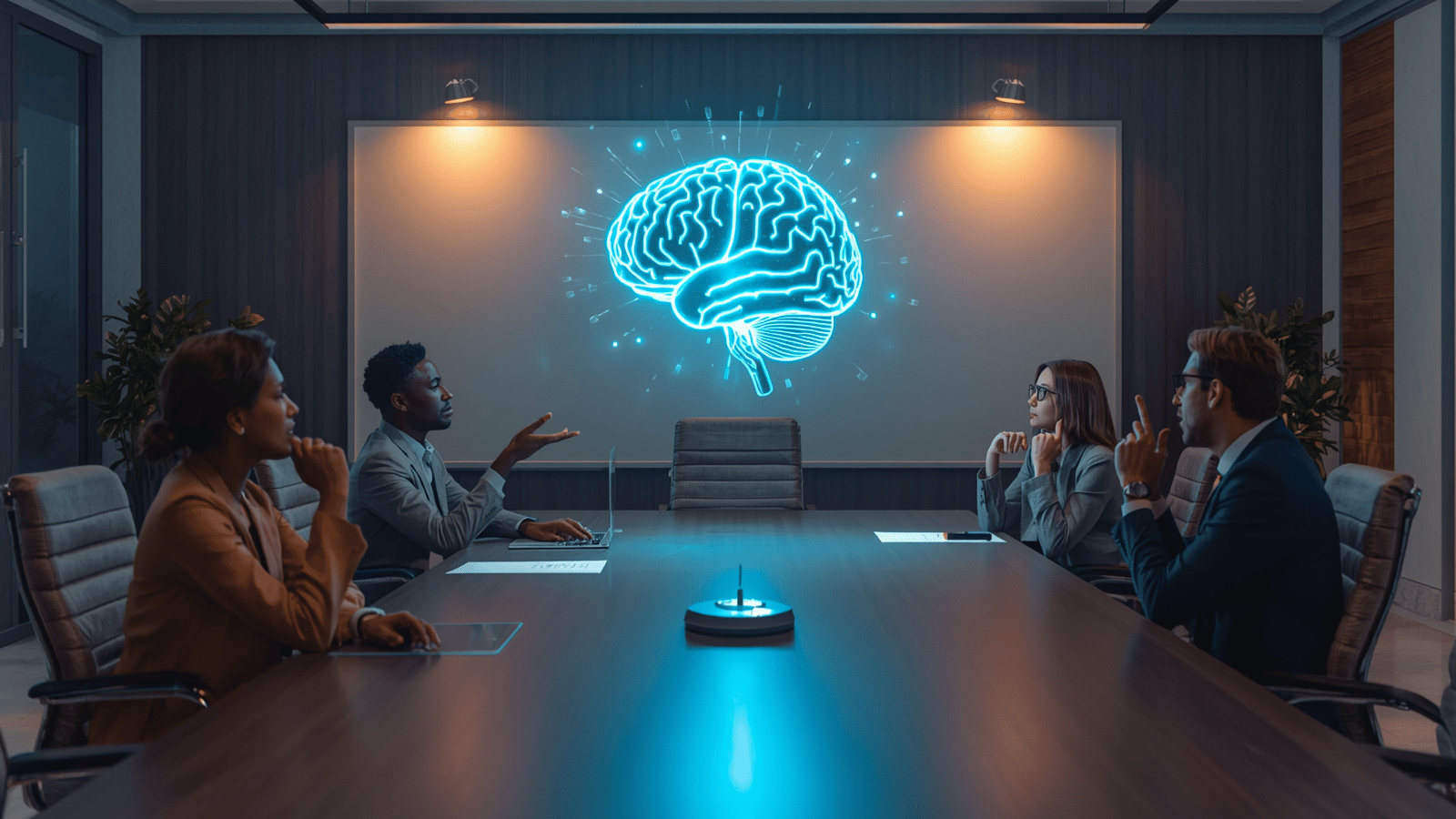
This reality means that instead of replacing human labor, automation is simply shifting the nature of work toward editing, auditing, and risk management. Companies are realizing that they need highly skilled human experts to sit at the end of the production pipeline to act as a sanity check. The true value in modern industry belongs to the professionals who can take a messy, raw machine output and inject the necessary cultural context, strategic alignment, and factual verification to make it useful.
The Illusion of Creativity in a World of Average Data
The current market is flooded with synthetic imagery, automated audio tracks, and algorithmic blog posts, creating an unprecedented wave of cultural noise. Because these models are trained on the existing sum of human internet output, they are mathematically optimized to produce the absolute average version of whatever you ask them to create. They excel at pastiche and imitation, but they are structurally incapable of creating a genuinely new artistic movement or a truly disruptive philosophical concept.
True human creativity is born out of constraints, personal trauma, cultural rebellion, and accidental mistakes, factors that cannot be coded into a weight matrix. When an artist breaks a rule of composition, they do so with intent to evoke a specific emotional response from another human being. A machine only breaks a rule because its training data was noisy or its prompt was poorly formatted. This means that while algorithmic tools can assist with mundane drafting tasks, the soul of storytelling, branding, and strategic positioning remains a purely biological monopoly.
The rapid rise of automated software has inadvertently heightened the value of genuine human weirdness and individual voice. As the internet becomes saturated with homogenized, perfectly optimized machine content, audiences are beginning to crave the friction, flaws, and unpredictable brilliance of human creators. The technology will undoubtedly continue to improve, processing information faster and generating cleaner drafts with each iteration. However, speed is not comprehension, and generation is not creation. The future does not belong to the machines, but to the humans who learn how to direct them without losing their own unique perspectives in the process.