Korean AI Startup AiBiz Cuts Semiconductor Defects with GPU-Free AI Platform Powered by AMD EPYC CPUs
South Korean industrial AI enterprise AiBiz deploys its DutchBoy platform on AMD EPYC CPUs to catch semiconductor wafer defects in real time without GPU hardware acceleration.
News About AMD EPYC
South Korean industrial AI startup AiBiz announced the deployment of its DutchBoy anomaly detection software powered exclusively by AMD EPYC™ server processors. Built without GPU acceleration, the system operates directly on servers embedded within semiconductor etching equipment, such as those at Samsung Electronics manufacturing facilities in South Korea and Xi’an, China.
Led by CEO Seung-Jae Ha and CTO Hyun Jin Choi, AiBiz engineered DutchBoy to process time-series sensor data and run Graph Neural Networks (GNNs) across 300 sensors per machine at 100-millisecond sampling rates. By consolidating model parameters to under 100,000, the platform eliminates the need for GPUs, avoiding the heat, cooling overhead, and latency challenges typically associated with GPU deployment inside fabrication cleanrooms. In collaboration with AMD Senior Manager Varun Selvaraj and hardware partner HPE, AiBiz selected AMD EPYC 9355 and 9554 CPUs, achieving a 30% increase in AI inference performance over legacy processors and resolving multithreading bottlenecks.
Significance of AMD EPYC
The integration of AMD EPYC CPUs in GPU-free industrial AI environments is significant because traditional generative and deep learning models rely heavily on costly power-hungry GPUs. For example, in a high-density semiconductor foundry, removing discrete GPUs reduces thermal emissions and power consumption while eliminating latency bottlenecks between separate processor sockets during real-time defect analysis.
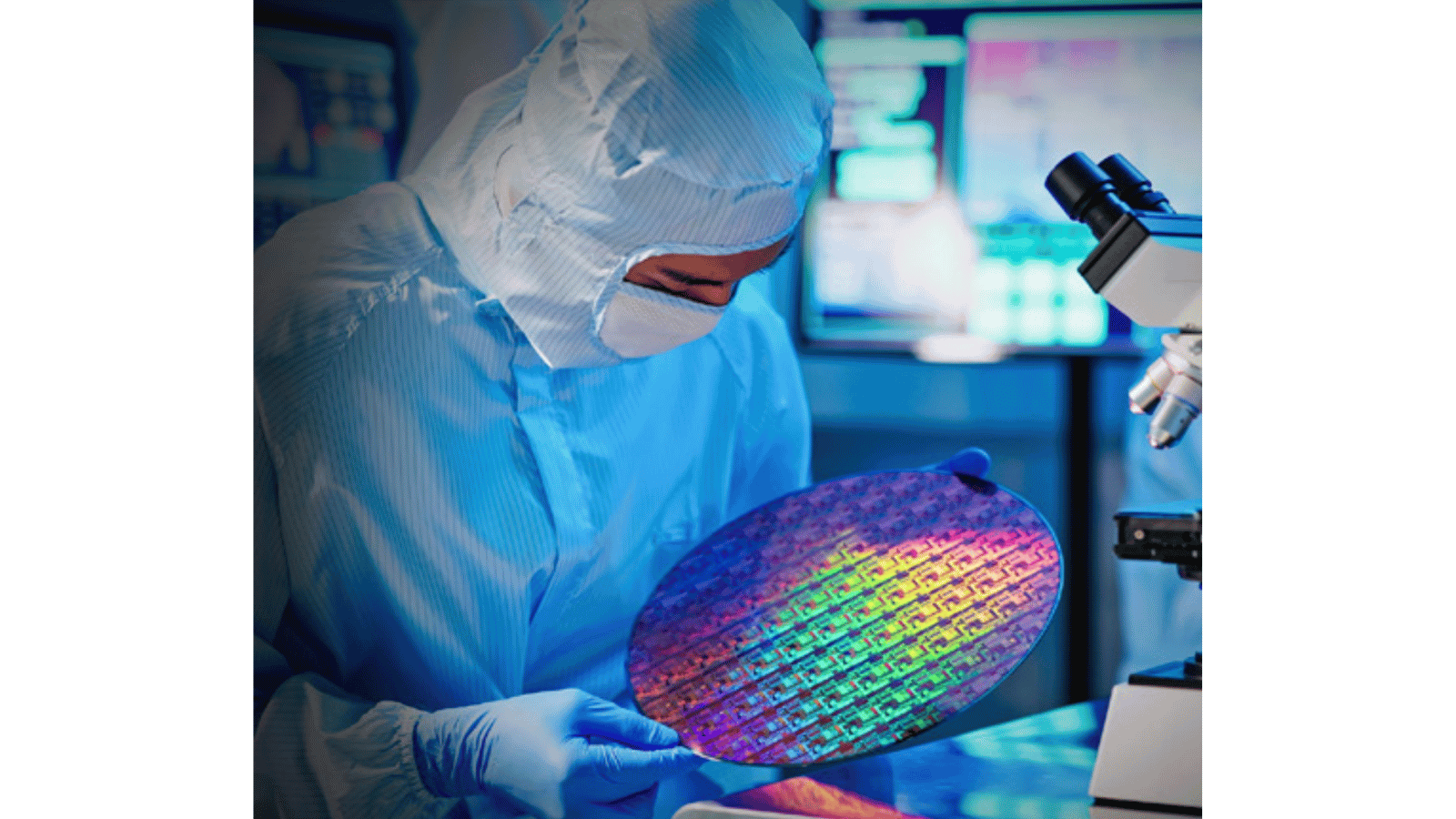
Detecting early manufacturing anomalies like chamber arcing allows engineers to intervene before an entire batch of expensive memory wafers—costing roughly 20 million won ($13,500) each—is ruined. AiBiz projects that early fault detection can prevent full-batch rejections and save up to 150 billion won ($100 million) annually per facility, while boosting overall foundry yield by 3% to 5%.
Furthermore, proving that lightweight AI models can run high-throughput inference on CPU-only architecture lowers hardware procurement barriers for industrial manufacturers. It demonstrates that specialized edge workloads can achieve real-time performance and high cost efficiency without heavy GPU infrastructure investment.
Next Steps for AMD EPYC
Following successful deployments across domestic and international Samsung Electronics fabrication plants, AiBiz plans to extend its AMD EPYC-powered DutchBoy system to Outsourced Semiconductor Assembly and Test (OSAT) facilities and LG Innotek.
Looking ahead, the startup aims to expand its global customer base across major global foundries including SK Hynix, Intel, and Micron. AiBiz will continue working alongside AMD and HPE to optimize server hardware setups for edge deployments in high-tech manufacturing plants worldwide.