Mercury Command Interface Launches for Enterprise Banking
Financial technology firm Mercury launches Mercury Command to automate corporate treasury, payments, and invoicing via a conversational interface.
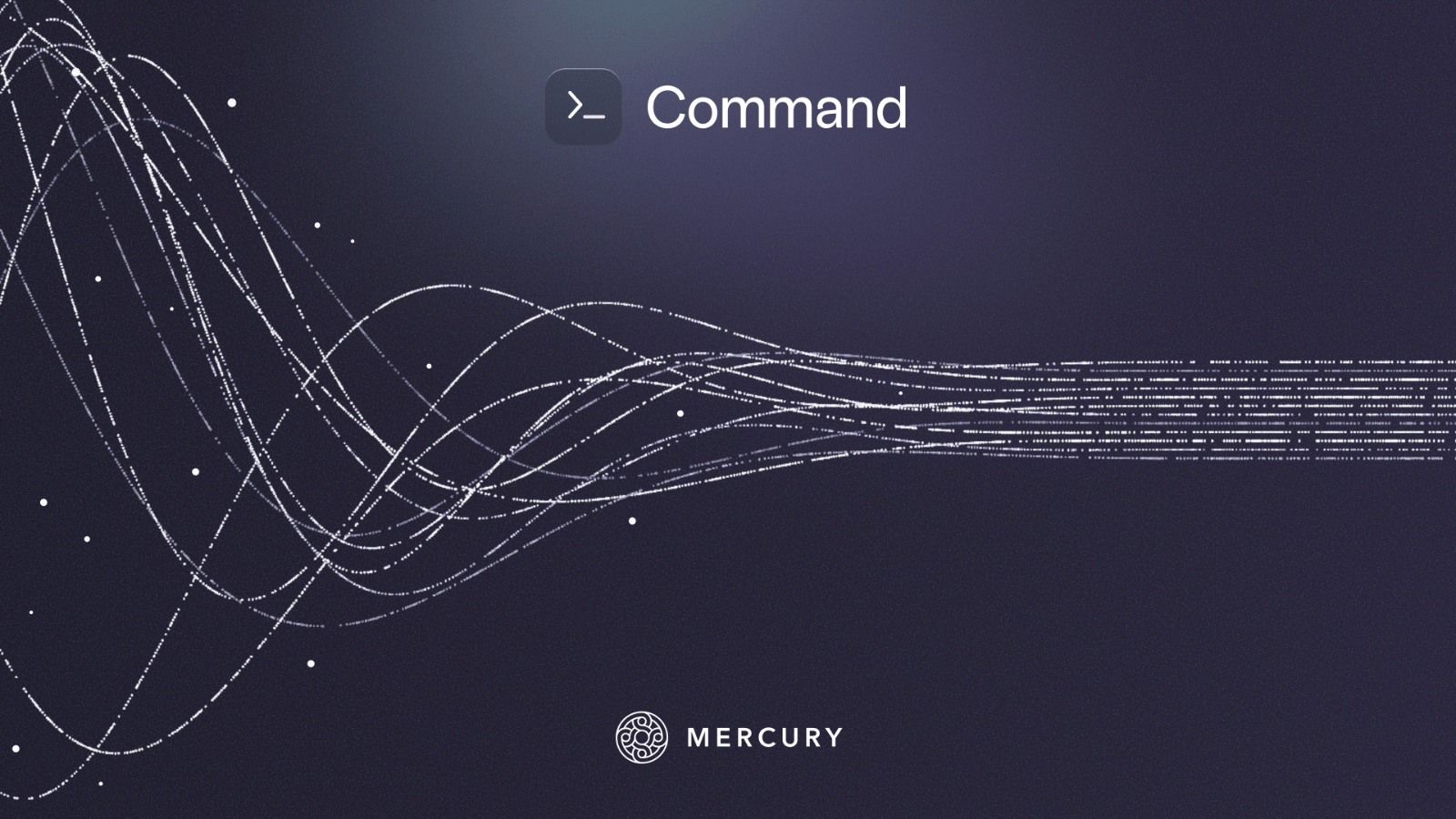
The Mercury Command interface debuted morning Tuesday as San Francisco business financial technology provider Mercury released an automated conversational management layer across its primary commercial accounting services. The software architecture allows enterprise administrators to execute complex funds routing, invoice dispatching, and ledger sorting through natural language text inputs rather than clicking through traditional web menus. This development brings conversational automation directly into live cash management repositories, allowing corporate operators to manage corporate banking resources through single conversational threads.
By grounding the Mercury Command application within verified operational records, the technology provider aims to bypass the configuration friction commonly associated with manual financial reporting. The software translates conversational text inputs into formal database commands to adjust corporate credit allocations, stage international outbound wires, or modify automated cash sweeps. Every staged transaction generates an explicit confirmation prompt, establishing a strict human verification layer before funds migrate across corporate ledger accounts.
The launch of the Mercury Command feature represents a broader effort within the banking technology sector to move financial software from a passive holding ledger into an active operational assistant. Corporate finance teams frequently spend multiple hours every week exporting transactional files into external spreadsheets just to perform basic cash flow forecasts or expense categorization. Integrating a continuous natural language layer directly into the underlying repository allows managers to verify cash balances and isolate specific vendor payments without leaving the central workspace.
Financial Efficiency Gains via the Mercury Command Interface
For technology buyers and corporate treasury managers, deploying the Mercury Command platform simplifies internal accounting pipelines by combining previously disconnected business services into a single operational interface. Modern corporate financial operations typically demand separate software subscriptions for spend tracking, corporate credit card management, and accounts payable processing. Unifying these functions behind a native conversational engine helps companies reduce the administrative labor required to keep operational ledgers synchronized with external account flows.
Enterprise technology executives view integrated conversational accounting tools as a key mechanism to improve financial visibility across regional product divisions. When transactional data remains isolated inside fragmented software suites, corporate leadership faces significant delays when evaluating immediate liquidity needs. The deployment of contextual natural language tools enables executive staff to pull up authenticated treasury declarations on demand, speeding up internal resource allocations during complex corporate cycles.
The corporate expansion strategy follows a substantial capitalization cycle for the financial technology firm, which recently concluded a significant late stage funding round led by growth equity syndicate TCV. The continuous development of automated product layers allows the technology provider to defend its market share against both legacy financial institutions and newer business payment processors. As automated software utilities become standard components of corporate operations, tech platforms must deliver advanced data synthesis tools to capture high volume enterprise clients.
Security Frameworks and Access Control in the Mercury Command Network
The operational deployment of conversational software models inside corporate financial accounts raises critical security questions regarding automated data exposure and unauthorized asset movement. The Mercury Command engineering architecture handles this corporate risk by anchoring the text processing model directly to pre established security permissions. A corporate user possessing basic employee expense permissions cannot query restricted executive payroll files or modify corporate treasury rules, ensuring that internal separation of duties remains uncompromised.
Integrating the Mercury Command Architecture with Legacy Corporate Treasury
The technological rollout aligns with a broader push by the company to expand its financial software ecosystem, which recently incorporated predictive forecasting modules and dedicated terminal command line interfaces for software developers. The addition of automated payroll capabilities, driven by the recent acquisition of specialized automation provider Central, will further expand the volume of operational records managed within the central corporate database. This concentration of financial services creates a comprehensive data lake, allowing the natural language model to deliver highly accurate operational context across multiple business units.
As business automation software scales across the enterprise sector, the commercial viability of conversational accounting utilities will depend on their ability to maintain absolute data accuracy under variable market conditions. Financial officers demand verifiable data lineages, rejecting black box software solutions that cannot immediately link conversational summaries back to original bank settlement files. The structured confirmation pipelines built into the new interface represent a calculated approach to deploying artificial intelligence safely within high value corporate transaction networks.