Substrate AI Eligibility Agent Launches for Healthcare RCM
Substrate AI launches the Substrate AI Eligibility Agent to resolve coverage, coordination of benefits, and demographic errors inside healthcare RCM.
The Substrate AI Eligibility Agent software architecture entered general availability on Wednesday as healthcare financial technology developer Substrate AI officially launched its specialized agentic revenue cycle management (RCM) application. Engineered specifically for accounts receivable (AR) and denial management teams, the platform introduces an autonomous diagnostic layer designed to identify, correct, and write back missing registration data before front-end mistakes suppress institutional net revenues. By cross-referencing multi-clearinghouse data streams with live payer portals, the software enterprise intends to help medical practices, large physician groups, and multi-facility health systems reduce the high labor expenses traditionally required to research administrative claim rejections manually.
The corporate strategy behind the standalone software rollout targets the acute financial leakage and transactional drag that routinely complicate modern healthcare revenue cycles. Internal network data from Substrate indicates that front-end eligibility, demographic, and registration discrepancies represent up to 35% of total healthcare claim denials by volume and up to 60% of total lost revenue by dollar value. While traditional check-in software is built exclusively for basic front-desk verification—simply checking if a policy is active—it frequently fails to resolve intricate coordination-of-benefits (COB) hierarchies or secondary insurance carve-outs, leaving billing teams to troubleshoot unpaid balances manually after a claim has already failed.
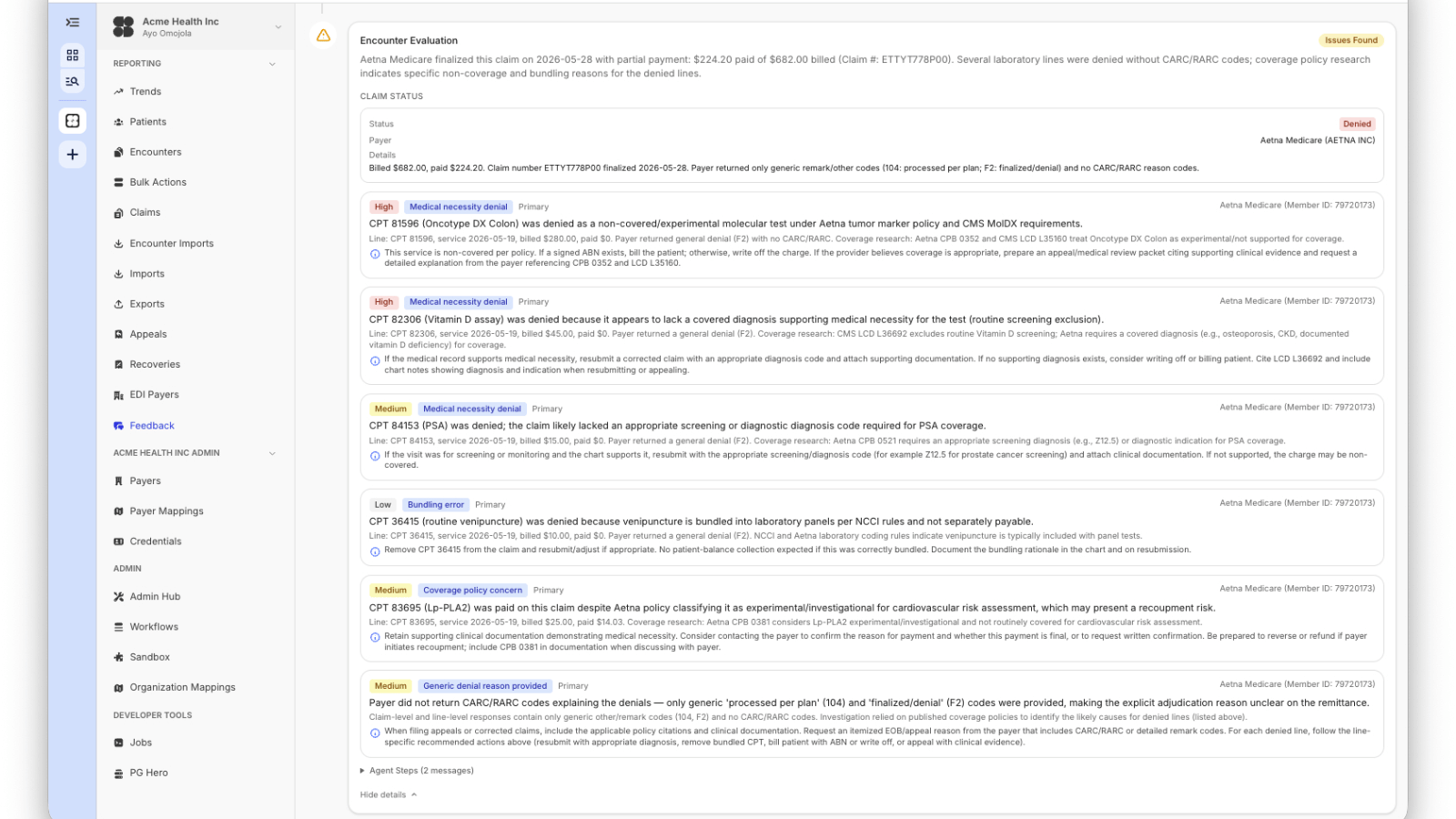
The underlying technology configuration unifies fragmented data protocols into a centralized analytical engine, bypassing the need for manual payer portal searches. The agent integrates electronic data interchange eligibility requests (EDI 270/271) with real-time claim status files (EDI 276/277), historic Explanation of Benefits (EOBs), and automated screen scraping from thousands of insurance portals. This cross-system data compilation allows the software to diagnose precise structural registration failures—including complex prior-authorization constraints, referral mismatches, and inaccurate demographic routing—automatically updating the healthcare organization’s existing system of record without requiring a full software migration.
Streamlining Financial Workflows via the Substrate ARC Platform
The deployment of the specialized eligibility agent marks a key expansion of the broader Substrate ARC (Autonomous Revenue Cycle) ecosystem, which coordinates automated modules for claim status tracking, policy compliance reviews, appeals drafting, and payment posting. The technical framework utilizes conversational and structured AI agents to handle mission-critical back-office administrative tasks across a network spanning more than 3,500 distinct healthcare payers. Implementing non-disruptive API integrations allows medical practices to deploy autonomous auditing layers directly alongside their existing practice management (PM) tools, minimizing technical onboarding hurdles and eliminating engineering lift.
Healthcare chief financial officers and revenue cycle directors monitor these automated clearinghouse tools to optimize cash collection cycles and control rising administrative overhead. When an enterprise medical group relies on manual labor to audit rejected claims, the protracted timeline to research, fix, and resubmit information often leads to missed filing deadlines and elevated write-offs. Implementing self-governed, adaptive financial agents ensures that complex registration corrections are executed continuously, delivering up to a 75% reduction in manual collection workloads while accelerating institutional cash flow.
Zero-Lift Workflow Integration: The Substrate Eligibility Agent is engineered to function natively within an institution’s pre-existing billing infrastructure, writing corrected insurance data directly back into existing work queues without demanding an expensive software rip-and-replace or database migration.
The data routing and parsing pathways prioritize strict information security controls and end-to-end data validation to safeguard protected health information (PHI) across highly regulated medical networks. The internal platform architecture handles sensitive consumer identity details, clinical classification records, and proprietary financial ledgers within encrypted, isolated cloud environments that fully satisfy strict national healthcare information privacy compliance mandates. This secure design ensures that billing organizations can automate complex claims processing and ledger reconciliation safely, eliminating data exposure risks across public networks.
Mitigating Labor Deficits via Scalable EHR-Compatible Automation
The operational management of the expanding software footprint is directed by founder and CEO Ayo Omojola, focusing on delivering deep, enterprise-grade interoperability across more than 20 prominent Electronic Health Record (EHR) platforms. By translating complex, unstructured insurance rejection codes into clean, actionable data updates automatically, the software insulates healthcare billing divisions from ongoing clerical labor shortages and high employee turnover. Providing automated resolution paths for complex billing rejections enables medical practices to maintain predictable cash collection schedules, protecting independent clinical operations from structural financial compression.
Securing Financial Autonomy Across Diversified Medical Specialties
The long-term commercial viability of agentic revenue cycle management platforms will ultimately rely on how successfully software engineering teams can balance rapid multi-payer data ingestion with high administrative accuracy across varying clinical specialties. Industry analysts realize that as insurance compliance regulations mutate and automated workflows become standard fixtures within the medical economy, financial survival will dictate the adoption of autonomous backend infrastructure. The systematic global rollout of the Substrate ARC ecosystem establishes an advanced technological standard, demonstrating a unified model where continuous data orchestration and machine learning combine to safeguard healthcare provider revenue at scale.