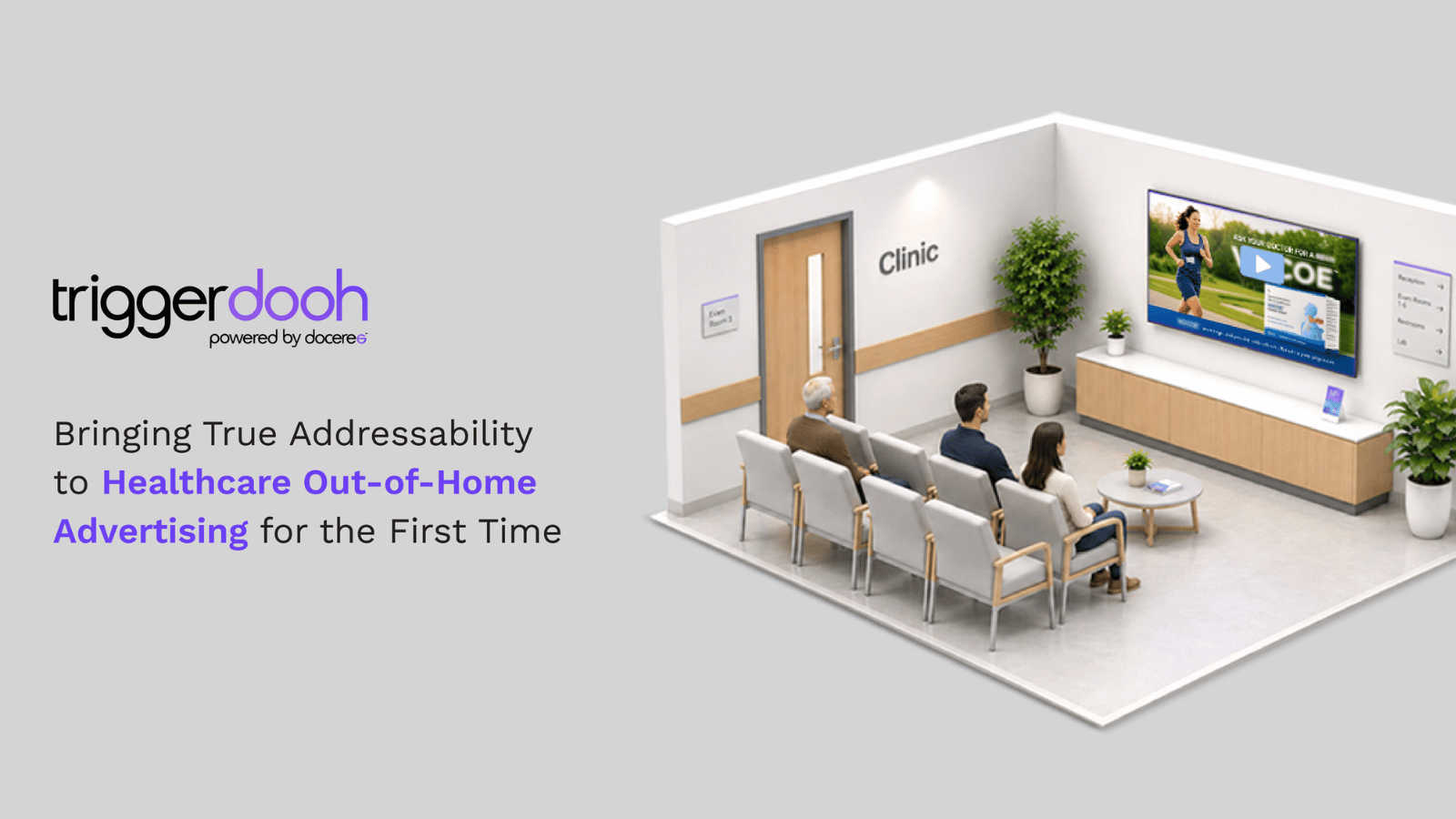
Trigger DOOH System Unveiled By Doceree To Contextually Target Healthcare Media Displays
Technology company Doceree launches Trigger DOOH at Cannes Lions, bringing addressable, real-time clinical signal targeting to healthcare screens.
The Trigger DOOH network infrastructure debuted on Tuesday morning as healthcare advertising technology developer Doceree introduced an automated contextual targeting engine engineered to activate digital out of home media displays based on immediate medical reception milestones. Unveiled from the Cannes Lions International Festival of Creativity in France, the communications system processes anonymous clinical data signals to update public informational screens inside medical office structures, neighborhood pharmacies, and localized hospital campuses. By replacing traditional static video sequences with algorithmic display pathways, the software platform intends to help life science corporations and consumer healthcare brands deliver specialized messaging at the exact moment localized clinical interest forms.
The technical configuration relies on a unified, intent-driven buying workspace that handles data routing across an extensive network of physical screens positioned throughout the United States. The system processes spatial traffic metrics using specialized tracking algorithms, transforming patient check-in events into immediate broadcasting instructions for local display panels. This responsive operational loop bridges the gap between digital data networks and real-world clinical spaces, allowing relevant dermatology notices or localized oncology details to populate waiting room screens based on active medical appointment workflows in the immediate vicinity.
The corporate strategy behind the addressable out of home deployment addresses the low transactional efficiency and scattered allocation structures that historically complicated legacy healthcare advertising campaigns. Traditional digital out of home media layouts operated exclusively as broadcast utilities, displaying uniform messages to variable demographics without analyzing real-time institutional context. Transitioning physical media properties into contextually responsive surfaces enables pharmaceutical brand managers to isolate their capital spending exclusively to properties displaying active treatment intent, protecting overall marketing efficiency metrics.
Engineering Strict Privacy Protections Inside the Trigger DOOH Subsystem
The deployment of the Trigger DOOH platform reflects a broader structural transition within the regulated medical marketing market, where technology buyers require strict compliance layers to safeguard information processing. Traditional web native marketing engines frequently rely on tracking cookies or persistent personal histories to target individual consumers, a practice that introduces immediate regulatory liabilities within health sectors. The network architecture counters this structural vulnerability by drawing its automated triggers exclusively from aggregated, de-identified clinical signals rather than personal patient records, keeping all media actions aligned with strict HIPAA data security rules.
Enterprise compliance officers and life science marketing directors track these anonymous data parsing protocols to de-risk advertising placements across highly regulated national healthcare networks. When an ad distribution system can execute localized content optimizations without archiving or transmitting protected health records, corporate legal teams can authorize wide scale deployments with higher confidence. Implementing non-identifiable data pipelines allows pharmaceutical companies to maintain strict information boundaries, preventing unauthorized data extractions across public display terminals.
The underlying technical coordination integrates the out of home distribution engine directly with established point of care software platforms, allowing corporate teams to unify their digital messaging across distinct clinical environments. The administrative workspace maps display schedules alongside active electronic health record software interfaces, enabling marketing specialists to coordinate multi channel communications from a single digital command terminal. This unified synchronization ensures that clinical audiences encounter consistent, contextually relevant information whether navigating professional digital software or reviewing local institutional signage.
Streamlining Media Procurement via the Trigger DOOH Buying Interface
The operational management of corporate media accounts uses patented software triggers to automate the bidding and placement of programmatic creative assets within milliseconds of a diagnostic check-in signal. The platform dashboard eliminates the manual scheduling steps and fractured vendor contracts that traditionally prolonged the execution of multi site out of home campaigns. Providing media planners with a consolidated interface to adjust active campaign criteria dynamically helps life science organizations optimize their localized outlays based on fluctuating regional healthcare developments.
Improving Clinical Dialogues inside Local Medical Waiting Rooms
The broader commercial utility of context aware communication platforms connects directly to improving patient awareness and driving informed treatment dialogues during routine clinical consultations. Industry research indicates that when waiting room displays present educational summaries that align precisely with a patient underlying medical needs, the subsequent consultation yields higher engagement. Providing clear, condition specific resources at the point of care helps patients structure their inquiries more effectively, enabling healthcare professionals to evaluate relevant treatment pathways during scheduled appointments.
The long term commercial viability of programmatic out of home networks will ultimately depend on how successfully technology providers can scale spatial screen access while maintaining absolute verification standards for enterprise buyers. As healthcare systems continue to consolidate corporate properties, the reliance on transparent, highly measurable marketing channels will continue to guide procurement budgets. The comprehensive rollout of the Trigger DOOH ecosystem highlights a definitive transition toward automated, compliant media delivery systems that unify heavy computer vision engineering with real-time clinical intent.