HYXI Aura Storage Platform Launches at Intersolar
Smart energy firm HYXI launches the HYXI Aura residential storage system and automated Muse operating software at Intersolar Europe 2026.
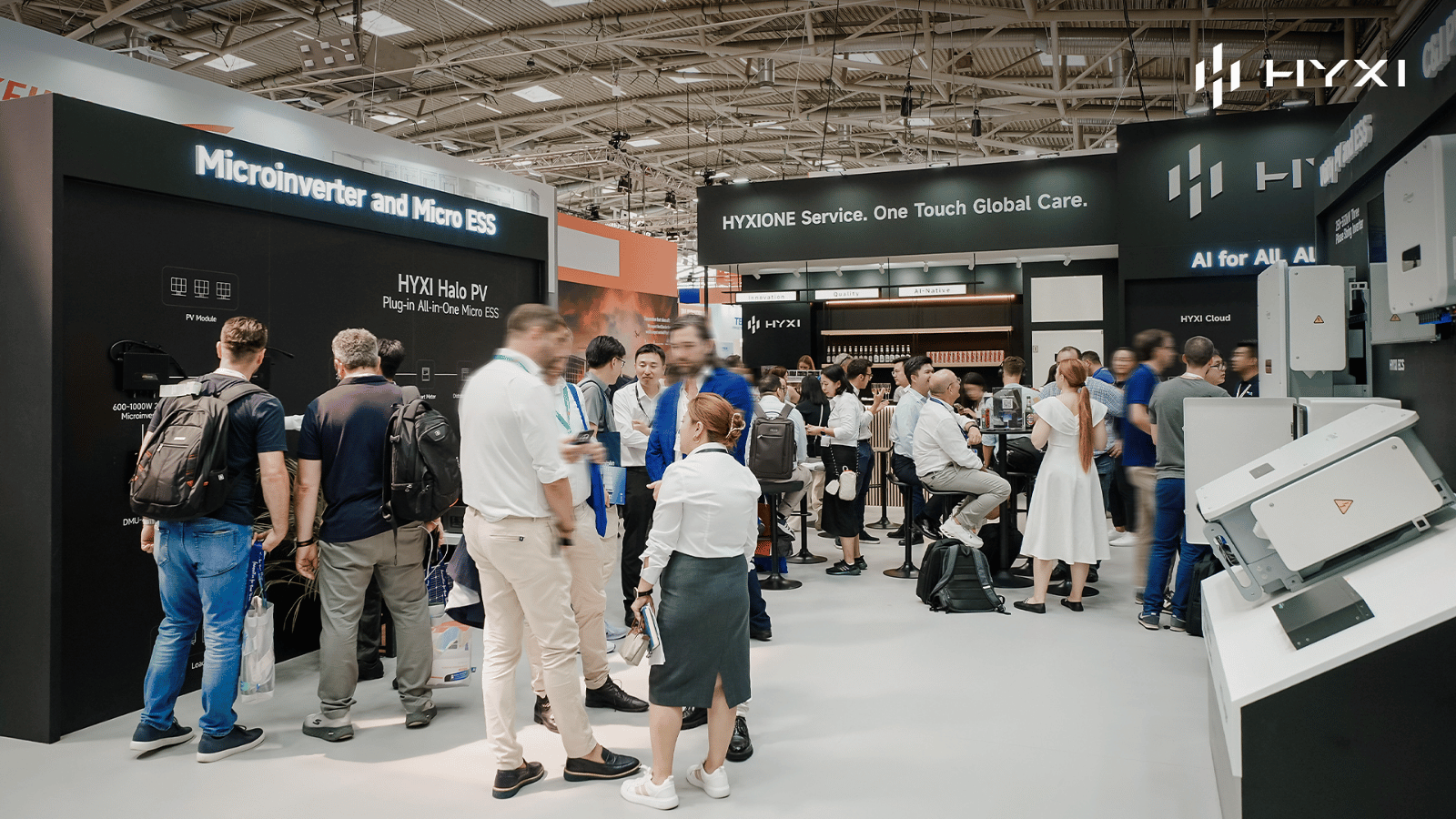
The HYXI Aura industrial platform made its public debut on Tuesday as smart energy equipment manufacturer HYXI introduced a series of high density battery hardware combinations alongside an integrated cloud software engine at the Intersolar Europe conference in Munich. The hardware rollout serves as the company premier European presentation following a formal corporate restructuring that removed the power suffix from its global trade moniker. By deploying self contained residential hardware lines alongside large scale liquid cooled cabinets for commercial enterprises, the technical developer intends to capture expanding consumer and corporate demand for decentralized electrical storage assets across European municipal grids.
The corporate strategy behind the multi-tier hardware release focuses on mitigating the installation friction and structural component dependencies that traditionally drive up the cost of residential renewable configurations. The flagship residential model incorporates automatic backup power controls natively within its structural chassis, eliminating the need for tertiary gateway enclosures or secondary external backup boxes. This streamlined mechanical alignment allows field technicians to complete residential deployments with significantly lower component overhead, accelerating the scaling timelines for local solar installation firms.
The technical development extends simultaneously into the compact residential and balcony solar segment through the expansion of a modular, alternating current coupled product series. The engineering team introduced a space efficient five kilowatt hour battery module alongside direct photovoltaic integration frameworks to capture excess solar generation directly at the panel level. This localized storage approach targets apartment residents and urban property owners who lack the physical space for traditional full scale basement battery racks, offering standard modular expansion paths to scale home capacity gradually.
Automating Distributed Infrastructure via the HYXI Aura Architectural Layer
The adoption of the HYXI Aura hardware framework aligns with an international transition within the global utility market, where smart battery arrays transition away from passive holding vaults toward active components of automated distribution grids. The entire product lineup runs on a unified, web connected software ecosystem codenamed Muse, which functions as an algorithmic energy management system. The core software platform monitors local power generation patterns and regional utility price fluctuations simultaneously, deploying predictive balancing routines to optimize household energy usage without manual human configuration.
Enterprise technology managers and commercial property developers look at hardware infrastructure scalability as a vital factor when evaluating smart energy procurement for industrial facilities. When a commercial site faces volatile industrial electricity rates, a lack of automated load shifting can lead to significant financial penalties during peak regional demand windows. Implementing heavy liquid cooled storage arrays, such as the company newly featured two hundred and sixty one kilowatt hour industrial cabinet, enables commercial operations to execute automated peak shaving routines, protecting local operating margins.
The underlying technical architecture utilizes advanced battery management algorithms to handle localized safety protocols and track internal cell degradation factors continuously over extended operational lifecycles. Traditional lithium iron phosphate configurations require constant internal thermal balancing to prevent localized cell hotspots from causing premature capacity reduction. Integrating closed loop liquid cooling manifolds inside the commercial line ensures that dense internal battery modules maintain uniform internal temperatures during rapid high voltage charging and discharging cycles.
Streamlining Virtual Power Plant Integration via the Muse Software Framework
The administrative management of distributed energy portfolios uses cloud based communication protocols to combine thousands of individual home battery units into coordinated virtual power plants. The central operating system translates real time regional grid balancing requests into localized battery dispatch commands, enabling connected households to export excess stored capacity back to the municipal network during acute energy shortages. This collective network response transforms residential appliances into active revenue generating assets for regional utility distributors, stabilizing macro electrical grids.
Securing Regional Distribution Pipelines through International Cooperatives
The broader international growth strategy relies heavily on formalizing multi market technology distribution agreements with local engineering firms and renewable logistics networks across Europe. Industry analysts understand that the commercial viability of international smart energy brands depends directly on the depth of their localized support networks and technical after sales response capabilities. Securing formal top brand industry certifications and signing strategic development agreements during the Munich summit allows the re branded enterprise to anchor its supply chain inside key European decarbonization corridors.
The long term commercial viability of decentralized storage networks will ultimately depend on how successfully hardware developers can merge power electronics engineering with responsive data networks. As international carbon mandates tighten and municipal electrical grids experience increased strain from erratic renewable generation sources, the reliance on self optimizing energy infrastructure will continue to guide commercial purchasing. The structured rollout of the HYXI Aura and associated industrial storage portfolios underscores a calculated transition toward unified, software managed utility ecosystems that operate autonomously at national scale.