Kestrel Compliance Launches Native Architecture Code App
Kestrel Compliance launches an integrated architecture code tool inside Autodesk Revit, raising over two million dollars in venture capital funding.
The Denver based automation startup closes a preseed financing round and secures an International Code Council data partnership to catch design errors early.
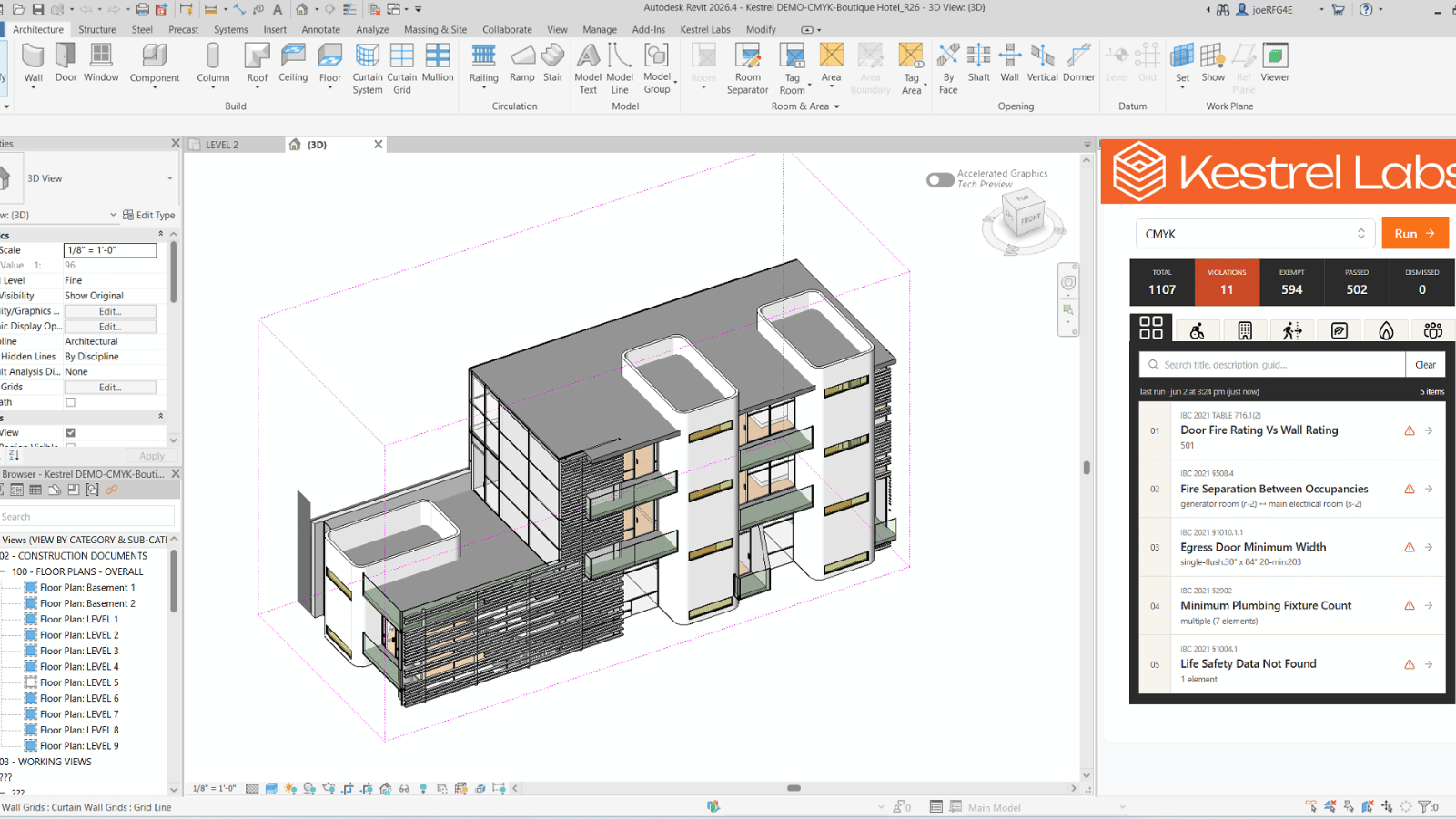
Denver startup Kestrel Labs introduced the Kestrel Compliance platform today at the American Institute of Architects conference, integrating automated building code verification directly into the production environment used by architecture and engineering firms. The system operates as a native extension within Autodesk Revit, checking three dimensional design models against location specific regulatory frameworks before schematics are submitted to local municipalities for formal plan review. Alongside the product launch, the company confirmed it has secured over two million dollars in early stage financing from a group of venture funds including New Stack Ventures and FirstMile Ventures.
The architectural software relies on an official data licensing agreement with the International Code Council to cross reference design elements against model building codes used throughout the United States and international markets. Rather than export architectural files to external auditing software, the tool evaluates structural elements, egress routes, and material selections while drafting is actively underway. The system highlights specific geometrical or material conflicts within the active workspace and appends the exact regulatory subsection governing the violation.
By embedding regulatory oversight into the early design phases, the platform aims to address structural labor shortages within the engineering and architecture professions. As a generation of senior architects possessing deep familiarity with regional building codes approaches retirement, firms increasingly rely on junior staff who must maintain high billable utilization rates with less opportunity for traditional mentorship. The automated checking system acts as a digital safety net, ensuring that less experienced designers can identify non-compliant layouts before they result in project delays.
Automated Code Diagnostics in Modern Building Information Modeling
The launch of the Kestrel Compliance system points to a broader effort within the construction tech sector to eliminate structural friction between design software and local regulatory approval processes. Traditional workflows require design teams to complete complex drawing sets before submitting them to local building departments, a sequence that often results in multiple rounds of revisions and unexpected project extensions when errors are uncovered late in the cycle. This automated evaluation process analyzes a three dimensional model in under a minute, presenting structural issues immediately so they can be corrected during initial drafting sessions.
Enterprise technology managers and principals at major design firms view compliance errors as a primary source of unpredictable financial risk. When a municipal plan examiner rejects a drawing set due to a code discrepancy, the resulting delays can stall construction schedules, inflate labor expenses, and damage relationships with real estate developers. Implementing automated verification tools allows corporate decision makers to standardize quality control across multiple regional studios, ensuring that every project adheres to local safety and zoning laws regardless of the specific team assigned to the account.
The system includes a browser accessible management dashboard designed for project executives who do not work directly inside complex design software, providing high level oversight of a firm overall regulatory risk profile. The pricing architecture sidesteps traditional per seat licensing models, opting instead for enterprise wide subscription pricing scaled to overall firm volume and geographical footprint. This approach allows multidisciplinary engineering and architectural operations to deploy the software across their entire workforce without incurring linear cost increases.
Shifting Labor Dynamics and Venture Investment in Construction Technology
Venture capital investment into the architecture, engineering, and construction sector has increasingly favored platforms that integrate directly into existing industry infrastructure rather than attempting to replace established design applications. The preseed funding round will support development teams as they expand the software to support alternative design suites, with integrations for Trimble Connect and SketchUp currently scheduled for release. This expansion strategy reflects the fragmentation of modern project delivery, where different subcontractors and consultants often employ distinct software tools on a single job site.
The entry of specialized software into this space complicates the market positioning of general purpose model checking tools that have historically dominated corporate procurement lists. While legacy desktop applications require specialized bim managers to configure intricate rule sets manually, newer platforms leverage cloud architecture and official data relationships to automate the maintenance of regional rule libraries. This structural shift moves compliance from an administrative task performed at major project milestones to a continuous background process.
As construction costs rise and municipal review backlogs persist, the commercial real estate ecosystem faces mounting pressure to accelerate project delivery timelines. The deployment of integrated design auditing tools highlights how technology providers are attempting to de-risk the initial phases of real estate development by replacing manual reference checks with automated diagnostics. The long term viability of these platforms will depend on how quickly their engineering teams can ingest and update localized code amendments across thousands of municipal jurisdictions.