
Queue Robotic Pharmacy Framework Emerges with Funding
Automation startup Queue emerges from stealth with an oversubscribed $12.6M seed round to launch the Queue Robotic Pharmacy Framework.
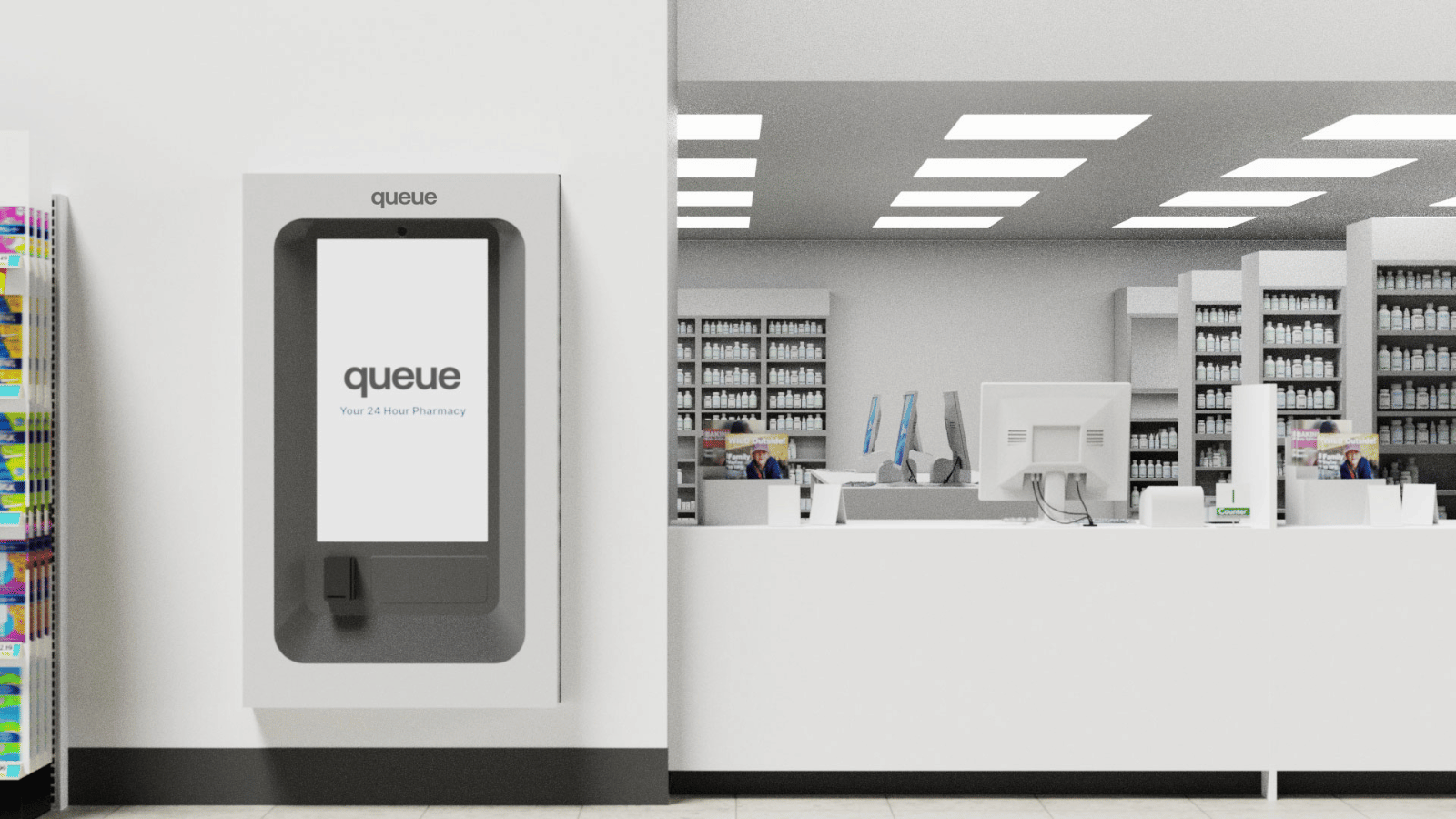
The Queue Robotic Pharmacy Framework officially emerged from stealth operations on Tuesday as automation developer Queue announced the completion of an oversubscribed 12.6 million dollar seed funding round engineered to scale the world’s first fully autonomous prescription fulfillment system. Led by venture firm AlleyCorp following an initial 6 million dollar pre-seed financing phase directed by Riot Ventures, the capital injection expands the company’s total funding pool to 18.6 million dollars. By integrating physical multi-axis robotic hardware with an intelligent inventory routing layer, the California-based enterprise intends to deploy self-contained prescription kiosks capable of operating safely without requiring an on-site pharmacist, bringing immediate infrastructural relief to a strained retail pharmacy landscape.
The corporate commercialization strategy directly counters the severe labor shortages, high operational overhead, and expanding geographical closures that currently threaten the 670.6 billion dollar United States retail pharmaceutical market. Industry data highlights a widening systemic crisis characterized by high technician vacancy rates, reduced enrollment at professional pharmacy schools, and the rapid expansion of rural and urban “pharmacy deserts.” Moving away from manually sorted, high-overhead retail storefronts allows institutional healthcare networks and national commercial chains to reduce localized prescription fulfillment expenses by up to 96%, maintaining vital community medication access points.
The underlying technical architecture manages the end-to-end fulfillment cycle within a secure, consolidated mechanical environment, translating raw incoming inventory directly into consumer-ready packages. The machine accepts sealed wholesale manufacturer pill bottles at its input stage and outputs filled, counted, and verified prescription vials containing custom labels at its terminal junction. Equipped with internal storage cells capable of holding thousands of units, the system currently supports 250 of the most frequently prescribed medications in the United States, utilizing highly precise mechanical sorting arms to fill a 60-count vial every 30 seconds.
Stabilizing Healthcare Distribution via the Queue Robotic Pharmacy Framework
The introduction of the Queue Robotic Pharmacy Framework marks a definitive paradigm shift within the medical logistics market, where technology developers shift away from peripheral digital workflows to automate the physical fulfillment layer itself. Traditional pharmacy computing improvements focused exclusively on web-native front-ends or electronic script processing software, leaving the physical counting, bottling, and cross-checking tasks reliant on human labor. Automating the physical manipulation of medication containers enables medical networks to deploy self-sustaining infrastructure blocks that process consumer demands with absolute, mathematically auditable precision.
Enterprise hospital operators and retail corporate executives track these autonomous dispensing benchmarks to de-risk localized health systems against severe understaffing and subsequent transactional errors. When a medical facility or community drugstore experiences overwhelming prescription volumes amid chronic employee shortages, the operational stress significantly elevates the statistical probability of human medication mix-ups. Implementing fully self-contained mechanical fulfillment layers ensures that high-volume standard scripts are completed with uniform accuracy, freeing professional medical staff to focus exclusively on clinical consults and complex compounding needs.
The underlying data interface prioritizes absolute administrative security and patient authentication by routing order verifications through a streamlined, digital verification matrix. Consumers interact with the automated kiosk by scanning a unique, secure QR code displayed on their personal mobile devices, initiating an instantaneous cloud-level cross-check against active digital prescription registries. This localized security architecture enables the platform to validate identity parameters and execute multi-tier insurance coverage reconciliations instantly, preventing unauthorized drug access while maintaining complete data integrity boundaries.
Streamlining Hardware Scalability via Proven Engineering Expertise
The operational management of the Silicon Valley robotics team leverages the specialized technical background of its founding partners, pairing seasoned healthcare entrepreneur Nick Desai with automation specialist Josh Liu, whose previous engineering history spans key roles at Tesla and Zipline. By applying advanced manufacturing methodologies and low-latency safety protocols derived from autonomous vehicle production to the medical distribution space, the group compresses standard hardware prototyping life cycles. The engineering division is leveraging its fresh capital reserves to scale its Silicon Valley technical workforce, accelerating multi-state enterprise deployment schedules.
Combating Regional Care Disparities through Predictive Inventory Networks
The broader commercial utility of unstaffed dispensing installations connects directly to alleviating deep regional care disparities across geographically isolated and low-income municipal sectors. The system utilizes an internal predictive artificial intelligence framework that continuous monitors localized consumption patterns and remaining cell volume counts, automatically flagging inventory depletion thresholds to remote distribution logistics teams before stockouts occur. Providing isolated rural zones, public medical clinics, and community retail spots with low-cost, self-monitoring dispensing portals ensures that vulnerable populations maintain consistent access to life-critical maintenance medications.
The long-term commercial viability of automated healthcare infrastructure will ultimately rely on how successfully hardware developers can balance dense mechanical execution with strict regulatory safety standards. As municipal healthcare spaces encounter persistent economic compression and structural labor shortages, the reliance on automated, self-contained utility blocks will continue to dictate capital purchasing. The successful field validation of the Queue architecture highlights a calculated model for how modern autonomous engineering can transform traditional medical logistics, turning legacy distribution networks into resilient, hyper-localized health infrastructure.