Finout Agents Launched to Automate Enterprise Cloud FinOps
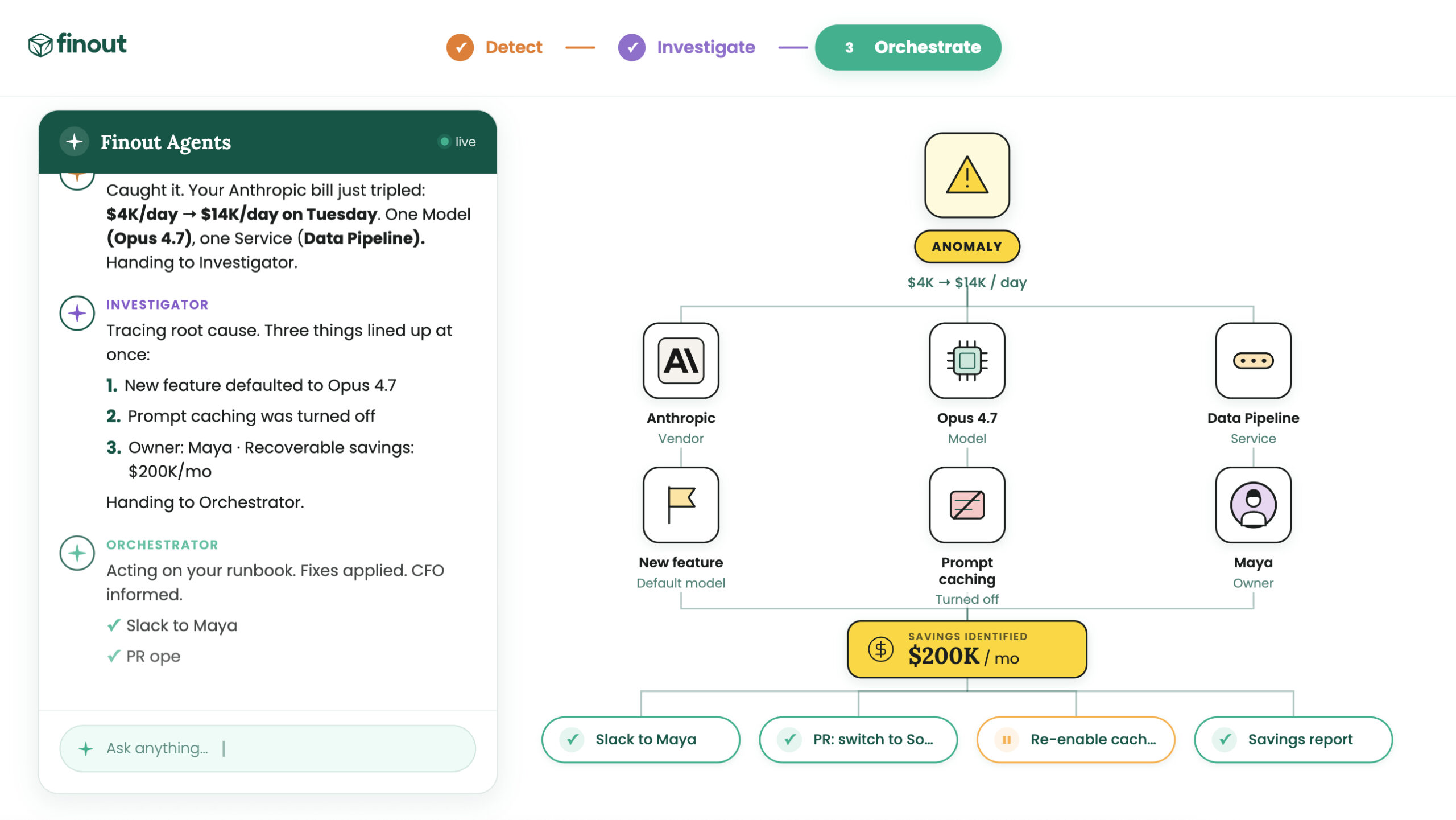
Finout Agents launched as a new suite of three automated tools designed to detect, investigate, and remediate enterprise cloud cost anomalies.
Finout has launched a new trio of automated software tools designed to manage enterprise cloud expenditures without requiring additional engineering headcount. The release introduces three distinct digital workers tasked with monitoring, identifying, and correcting unexpected spikes in infrastructure spending. This expansion comes as corporate finance and technology teams struggle to control escalating bills across multiple cloud providers and artificial intelligence platforms.
The newly introduced software suite targets a persistent problem in cloud financial operations, where small administrative teams are often responsible for oversight of massive operational expenditures. By utilizing automated workflows, the system aims to scale the efficiency of existing personnel by reviewing usage data continuously. The software is designed to differentiate between routine operational variations and genuine billing anomalies before notifying engineers.
The corporate strategy behind the release focuses on shifting cloud financial management from passive reporting to automated correction. Traditional monitoring tools often generate high volumes of alerts that require manual investigation by internal engineering teams. The technology provider aims to bypass this operational bottleneck by granting its system the authority to implement low risk adjustments independently while routing more complex operational decisions directly to infrastructure owners.
Finout Agents Target Infrastructure Spend Volatility
The collection of automated tools operates directly on the core data processing engine developed by the company. This structural foundation consolidates infrastructure expenses from Amazon Web Services, Microsoft Azure, Google Cloud Platform, and various specialized artificial intelligence infrastructure providers into a single operational view. By tying the automated software tools to this unified ledger, the system maintains context regarding which specific engineering teams are responsible for individual infrastructure assets.
The workflow within the Finout Agents package is divided among three specialized digital assistants that pass operational context between one another during a billing event. The first component monitors telemetry lines to spot spending variances, while the second component acts as an investigator to determine the root cause by examining deployment histories and code changes. The final component coordinates the response by either executing automated rollbacks or creating tracking tickets within existing corporate developer tools.
Operational Integration within Enterprise FinOps Workflows
The deployment of automated financial tools represents an attempt to bridge the gap between corporate finance departments and technical engineering teams. In most enterprise settings, financial analysts lack the technical visibility to understand why cloud bills fluctuate, while software engineers lack the financial incentives to optimize resource consumption. The introduction of Finout Agents aims to establish a standardized framework where spending anomalies are automatically contextualized with technical deployment records.
This automated triage process is built to operate within the existing communications infrastructure used by engineering departments. Rather than requiring users to log into a separate financial dashboard, the system delivers root cause analyses directly to internal messaging systems and project management repositories. This method ensures that the technical teams capable of altering infrastructure configurations receive relevant financial context alongside the code repositories responsible for the expenditure.
Cloud Financial Management Market Context
The launch of automated financial software arrives during a period of significant complexity for enterprise technology purchasers. The rapid adoption of large language models and containerized applications has created highly variable cost structures that change on an hourly basis. Competing financial management platforms from traditional cloud providers often fail to account for external software services, leaving enterprises with fragmented views of their total technology expenditures.
As corporate technology buyers face tighter macroeconomic scrutiny, the ability to control infrastructure budgets without increasing administrative overhead has become a priority for chief information officers. Organizations frequently overprovision cloud resources to ensure application performance, leading to structural waste that is difficult to identify manually. Automated operational tools present a potential path forward for enterprises seeking to maintain software performance parameters while enforcing strict budgetary boundaries across diverse computing environments.
The development of autonomous remediation systems represents an evolution in how corporations approach technical efficiency. By embedding financial logic directly into the software deployment cycle, enterprises can prevent budget overruns before they impact quarterly financial results. The integration of continuous monitoring, automated root cause analysis, and guided remediation provides a scalable framework for modern organizations navigating the unpredictable costs of modern cloud computing environments.
Source: businesswire