Learning Commons Platform Launches Open Infrastructure to Ground Artificial Intelligence in Learning Science
Nonprofit education technology initiative Learning Commons has officially announced the launch of the Learning Commons platform. The initiative provides educational software developers with open machine readable datasets, research backed rubrics, and automated instructional workflows designed to ensure generative artificial intelligence tools adhere to foundational learning science.
News About Learning Commons Platform
Redwood City California based organization Learning Commons revealed its open public infrastructure platform to address the growing presence of artificial intelligence in K 12 classrooms. While general purpose foundation models can generate classroom content, they frequently lack grounding in how concepts sequence across developmental grades, where conceptual misunderstandings arise, and how state curriculum standards function in practice.
Led by President Sandra Liu Huang, the organization structured the platform to operate completely behind the scenes without accessing or storing student personal data. Key components available to developers include:
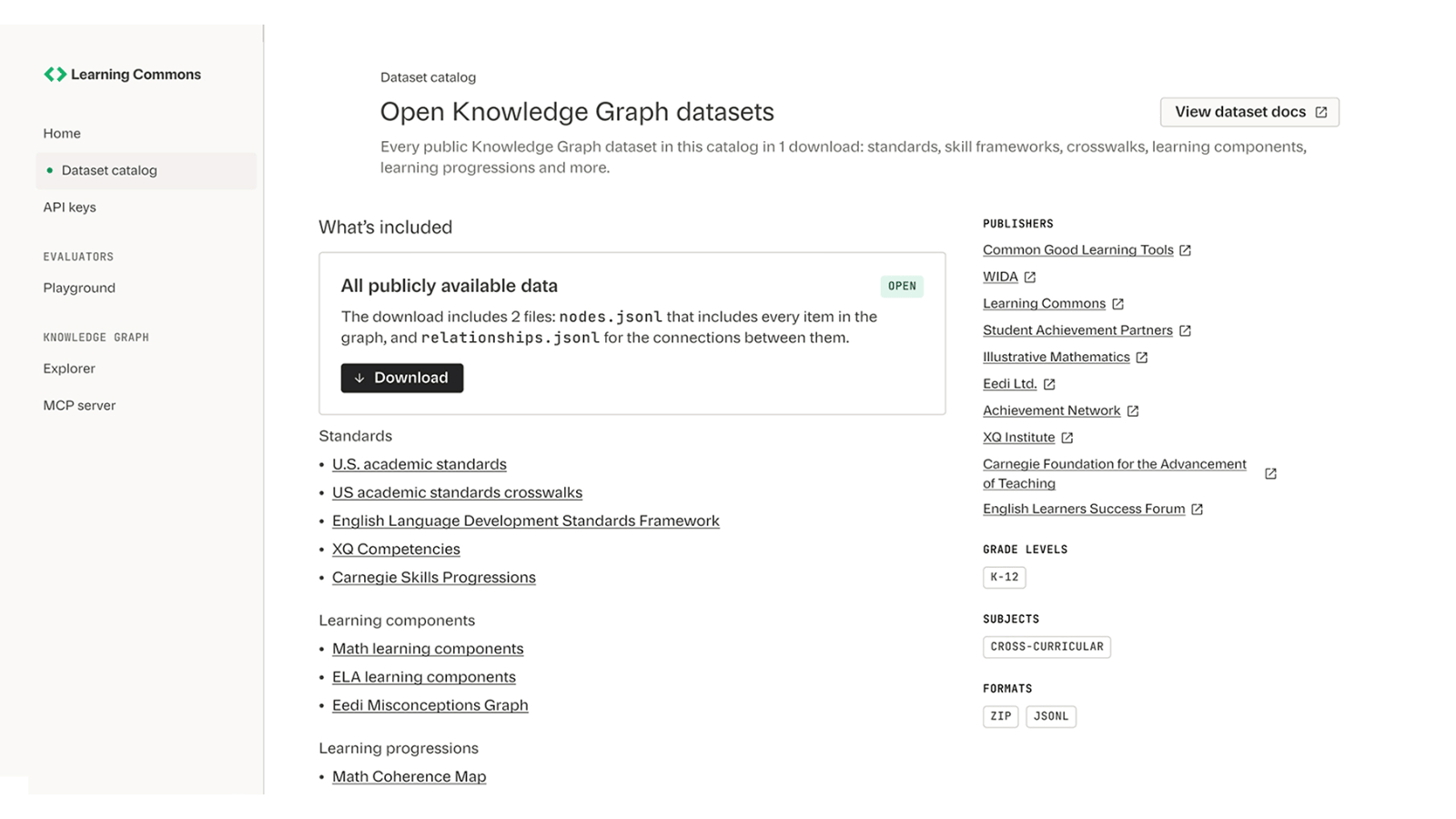
- Knowledge Graph Datasets. Structured curriculum maps covering state academic standards, learning progressions, and durable competencies. This includes the newly integrated Eedi Misconception Graph, an open source initiative supported by the Gates Foundation that diagnoses underlying mathematical misunderstandings behind incorrect student answers.
- Pedagogical Evaluators. Standardized testing frameworks that evaluate artificial intelligence generated educational materials against expert rubrics. The newly released Durable Skills Evaluator measures critical thinking and evidence based argumentation, supplementing existing evaluators for math standards alignment, writing feedback, and reading text complexity.
- Agent Skills Workflows. Reusable instructional templates developed alongside artificial intelligence research labs like Anthropic. These workflows assist teachers with lesson planning, differentiation, and comprehension checks.
A wide array of educational organizations announced direct integrations with the Learning Commons platform. Partners include Canva Education, which is utilizing the Knowledge Graph to align interactive mini lessons with state standards, alongside Level, MagicSchool, OKO Labs, Really Great Reading, and TalkingPoints. These join existing collaborations with frontier artificial intelligence labs Anthropic and OpenAI.
Significance of Learning Commons Platform
The introduction of the Learning Commons platform is significant for the educational technology sector because artificial intelligence adoption across school districts has outpaced quality verification frameworks. When developers build classroom assistants using raw foundation models, they often spend substantial engineering time manually assembling curriculum crosswalks and alignment rubrics.
Providing open, standardized educational infrastructure removes the redundant overhead required to build pedagogically sound tools. EdTech startups and major platforms can draw upon verified knowledge graphs and diagnostic misconception trees, ensuring that automated learning tools deliver accurate instructional progressions rather than superficial or confusing responses.
Furthermore, integrating learning science rubrics into artificial intelligence development pipelines provides teachers, school principals, and district administrators with greater confidence. By validating that classroom software aligns with state academic benchmarks and nurtures durable critical thinking skills, the platform helps schools adopt artificial intelligence responsibly without sacrificing pedagogical rigor.
Next Steps for Learning Commons Platform
Following the public rollout, Learning Commons is providing open access to its dataset catalog and evaluator suite for developers, researchers, and educational institutions worldwide. Engineering teams will work closely with launch partners to monitor initial integration benchmarks across reading, mathematics, and multilingual family engagement tools.
Looking ahead, Learning Commons will release expanded agent skill libraries later in the year to support automated lesson plan auditing, formative assessment reviews, and decodable passage creation. The organization plans to broaden its open curriculum maps to incorporate additional subjects while partnering with academic researchers to advance public evaluation standards for generative educational software.