Indian Corporate Mobility Veteran K.S. Vikram Murthy Talks Client Trust, Employee Welfare and Ground-Level Leadership with RawScribe
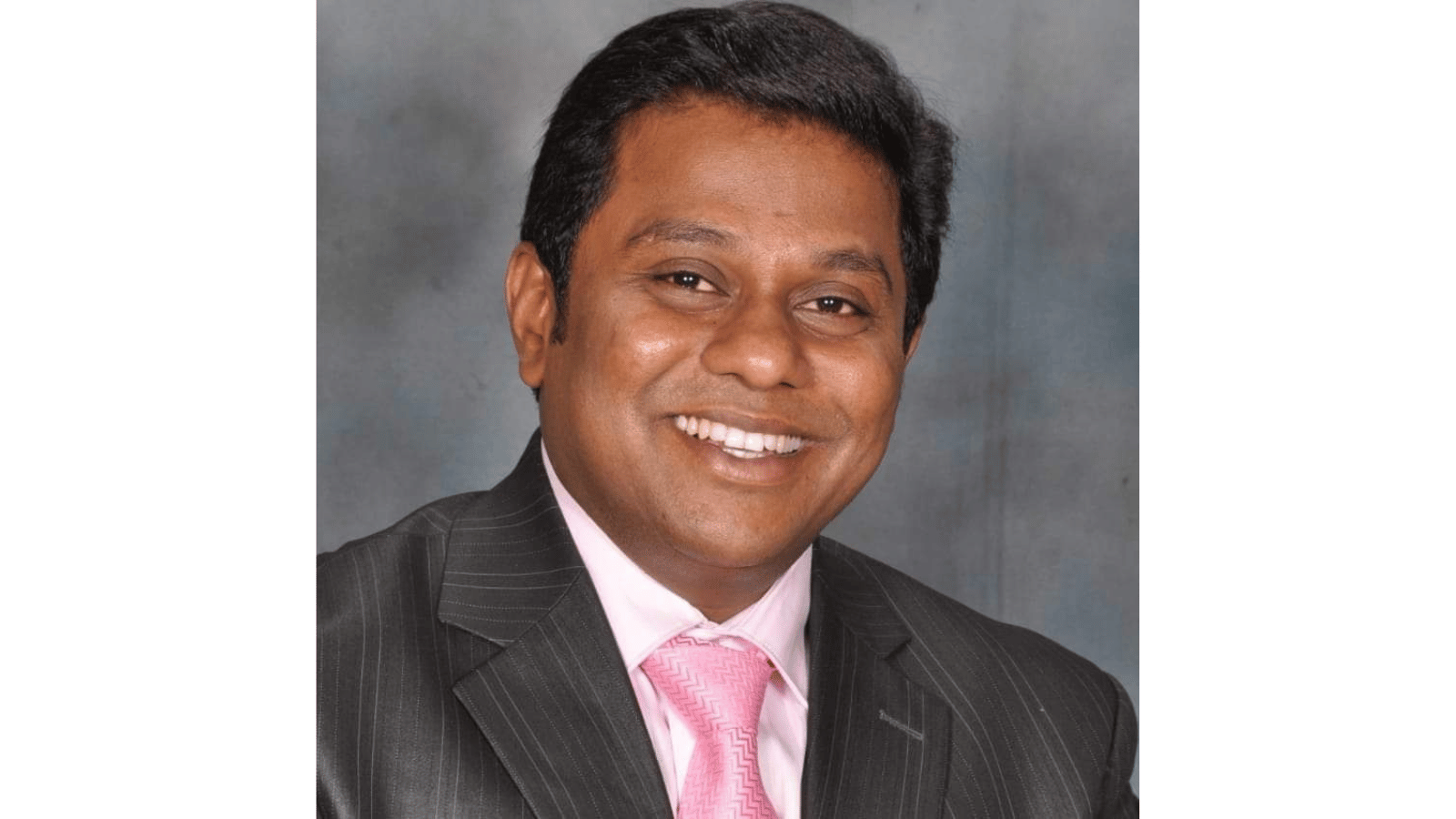
In an industry where every minute matters, corporate mobility is ultimately built on two relationships, the trust of the client and the commitment of the people delivering the service. For Dr. Lion K.S. Vikram Murthy, Chairman & Managing Director of OKO Elite Travel World Pvt. Ltd., these two principles have remained central throughout his approximately 26-year journey in the transportation and corporate mobility industry. His practical industry experience is complemented by an Honorary Doctorate in Transport Management & Business Administration, but K.S. Vikram Murthy believes that qualifications and designations have meaning only when they translate into responsibility, service and leadership on the ground.
Today, OKO Elite is strengthening its presence across India, providing corporate mobility solutions across employee transportation, airline crew transportation, premium business mobility, long-term rentals and leasing, and MICE transportation. Yet, behind the vehicles, technology and expanding operations lies a philosophy that K.S. Vikram Murthy considers fundamental: Clients must feel valued, employees must feel respected, drivers must feel supported, and leadership must remain accountable.
For him, the Chairman & Managing Director designation is simply a title within the organizational structure. He considers himself another employee of OKO Elite, one who carries an additional responsibility to lead by example. His aspiration has never been merely to be called a boss or a Chairman. He prefers to be recognized as a leader, mentor and role model who is willing to stand alongside his team when challenges arise.
Client Trust Is Earned Every Single Day
Corporate mobility is not simply about providing a vehicle from one location to another. For large organizations operating employee transportation, airline crew movements, IT/ITES, BPO, banking, manufacturing and other time-sensitive businesses, transportation becomes an integral part of business continuity. A delayed vehicle can affect an employee’s shift. A missed airport movement can disrupt a crew schedule. A transportation failure involving training personnel can affect an entire program.
For this reason, K.S. Vikram Murthy believes that every trip must be treated as a responsibility rather than merely a transaction. RawScribe recently spoke with K.S. Vikram Murthy about client relationships, employee welfare, leadership and the realities of building a corporate mobility organization capable of growing without losing its human touch.
RawScribe: What do you believe enterprise clients should expect from a corporate mobility partner beyond vehicles and pricing?
K.S. Vikram Murthy: “Pricing and fleet strength will always be important, but corporate mobility is ultimately about trust, responsibility and consistency. When a client gives us a transportation responsibility, they are not simply giving us a business contract. They are trusting us with their employees, executives, airline crew members and, most importantly, their safety and time.
That responsibility must never be taken lightly. Our objective is therefore not merely to become another vendor. We want to become a dependable mobility partner whom the client can reach when there is a challenge and trust that our team will take ownership. Mistakes and operational challenges can happen in any service industry. What differentiates an organization is how quickly it responds, how transparently it communicates, how seriously it investigates the issue and what corrective measures it takes to prevent recurrence. I strongly believe that client relationships are not built through presentations, they are built through performance, transparency and accountability every single day.”
Employee Welfare Is Directly Connected to Client Satisfaction
While vehicles may be the visible face of transportation, K.S. Vikram Murthy believes that people are the real infrastructure of the mobility industry. Drivers, operations executives, supervisors, control-room teams, fleet personnel, managers, finance teams and support staff collectively determine the service experience delivered to a client. His philosophy is straightforward: A company cannot expect employees to take care of its clients unless the organization is willing to take care of its employees. Employee welfare, therefore, is not viewed merely as an HR initiative. It is considered part of service quality itself.
RawScribe: Employee and driver retention is a major challenge in transportation. How do you approach employee welfare while maintaining operational discipline?
K.S. Vikram Murthy: “I have always believed that happy and respected employees create satisfied and long lasting happy clients. Transportation is an extremely demanding industry. Our drivers and operational teams work through early mornings, late nights, traffic, changing schedules, client requirements and unexpected operational situations. If we expect them to demonstrate commitment towards the organization, the organization must demonstrate commitment towards them. Employee welfare does not mean compromising discipline. In fact, I believe welfare and accountability must go together.
People should be treated with dignity, their genuine problems should be heard, their contribution should be recognized and they should know that the organization will stand with them during difficult situations. At the same time, every employee, including, me must remain accountable for the responsibility entrusted to us. That is the culture I want us to build at OKO Elite.”
“I Am Also an Employee of This Organization”
Despite holding the position of Chairman & Managing Director, K.S. Vikram Murthy does not believe hierarchy should create distance between leadership and employees. He continues to participate in client discussions, operational reviews, fleet planning, service-quality monitoring and interactions with employees and drivers. For him, leadership is demonstrated through behavior rather than designation.
RawScribe: As Chairman & Managing Director, how do you define your role within the organization?
K.S. Vikram Murthy: “I genuinely consider myself just another employee of OKO Elite. Chairman & Managing Director is my designation, but designation is ultimately only a title. It does not make one person more important than another person in the organization. Every employee has a role. Every driver has a responsibility. Every operations executive has a responsibility. And I have my responsibility. The difference is that leadership carries an additional obligation, where you must be prepared to take responsibility when something goes wrong, stand with your people during difficult situations, and show through your actions the standards you expect others to follow.
I don’t want people merely to recognize me because of my designation. I would rather be remembered as a leader, mentor and role model who worked alongside his team and helped people grow. For me, leadership is not about asking people to follow you. It is about conducting yourself in such a way that people develop confidence in following the standards you represent.”
Setting Trends Rather Than Following Them
Throughout his career, K.S. Vikram Murthy has sought to remain ahead of changes taking place in corporate transportation. The industry has evolved considerably, moving from largely manual fleet operations to increasingly technology-supported transportation ecosystems involving GPS monitoring, automated scheduling, compliance tracking, driver verification, safety protocols, control-room monitoring, and real-time operational visibility.
K.S. Vikram Murthy believes corporate mobility organizations must continuously evolve rather than wait for clients or regulations to force change. His ambition has been to position himself and OKO Elite as trend setters in the corporate mobility industry, rather than simply followers of existing practices.
RawScribe: You have often spoken about being a trend setter in corporate mobility. What does that mean to you?
K.S. Vikram Murthy: “Being a trend setter does not mean claiming that you are better than everybody else. For me, it means having the courage to introduce better practices before they become compulsory. If we identify something that can improve employee safety, driver welfare, client service, technology adoption, operational transparency or compliance, we should not wait until somebody forces us to implement it.
We should be willing to take the first step. Throughout my career, I have tried to understand where the industry is moving and prepare our organization accordingly. Corporate mobility is changing rapidly. Clients today rightly expect greater transparency, stronger safety standards, better technology, professional drivers, faster communication and measurable accountability. Our responsibility is to continuously raise our own standards. The best way to become a leader in an industry is not by repeatedly saying you are a leader. It is by setting standards that others eventually want to follow.”
Growth Without Losing the Human Connection
OKO Elite’s expanding mobility network today provides access to approximately 1,000 vehicles, supported by an internal workforce of around 105 employees. Its evolving portfolio includes corporate employee transportation, airline crew mobility, Business Transport Solutions, premium mobility, long-term car rentals and leasing, and MICE (Meetings, Incentives, Conferences, and Exhibitions) transportation. As the organization expands, K.S. Vikram Murthy believes the greatest challenge will not simply be adding more vehicles or entering more locations. The greater challenge will be preserving the organization’s culture, responsiveness and accountability while scaling.
RawScribe: What is your vision for OKO Elite as the organization continues to expand?
K.S. Vikram Murthy: “Our ambition is certainly to grow, but growth cannot simply be measured by fleet numbers, turnover, locations or the number of clients we serve. For me, genuine growth is when our clients trust us more, our employees grow with us, our drivers feel respected, our systems become stronger and our service standards continue improving.
I want OKO Elite to remain an organization where a client can reach the leadership when required and where an employee at any level feels that his or her contribution matters. As we expand, technology and systems will become increasingly important, but we should never allow technology or hierarchy to remove the human connection from our organization.
My vision is not merely to build one of India’s largest corporate mobility organizations. I want us to build one of India’s most trusted, respected and employee-friendly corporate mobility organizations. If our clients proudly say that OKO Elite is a dependable partner, if our employees proudly say that this is their organization, and if our drivers feel that they are treated with dignity and respect, then I believe we have achieved something far more meaningful than business growth alone. At the end of the day, vehicles can be purchased, technology can be implemented and businesses can be expanded. But trust has to be earned, relationships have to be nurtured and respect has to be given. That is the organization we are trying to build.”
Leadership Beyond Designation
K.S. Vikram Murthy’s journey reflects a philosophy that corporate mobility cannot be built around vehicles alone. It must be built around people, safety, discipline, technology, accountability and relationships. His approach places clients and employees at the center of the organization while treating leadership as a responsibility rather than a privilege.
After approximately 26 years in the transportation industry, his focus remains on strengthening OKO Elite while continuing to contribute towards raising professional standards within India’s corporate mobility sector. For K.S. Vikram Murthy, the measure of leadership is therefore not the designation written on a visiting card. It is the trust earned from clients, the respect earned from employees, the welfare extended to drivers and teams, and the standards a leader leaves behind for others to follow.