Nuclias Network Controllers Launched by D-Link
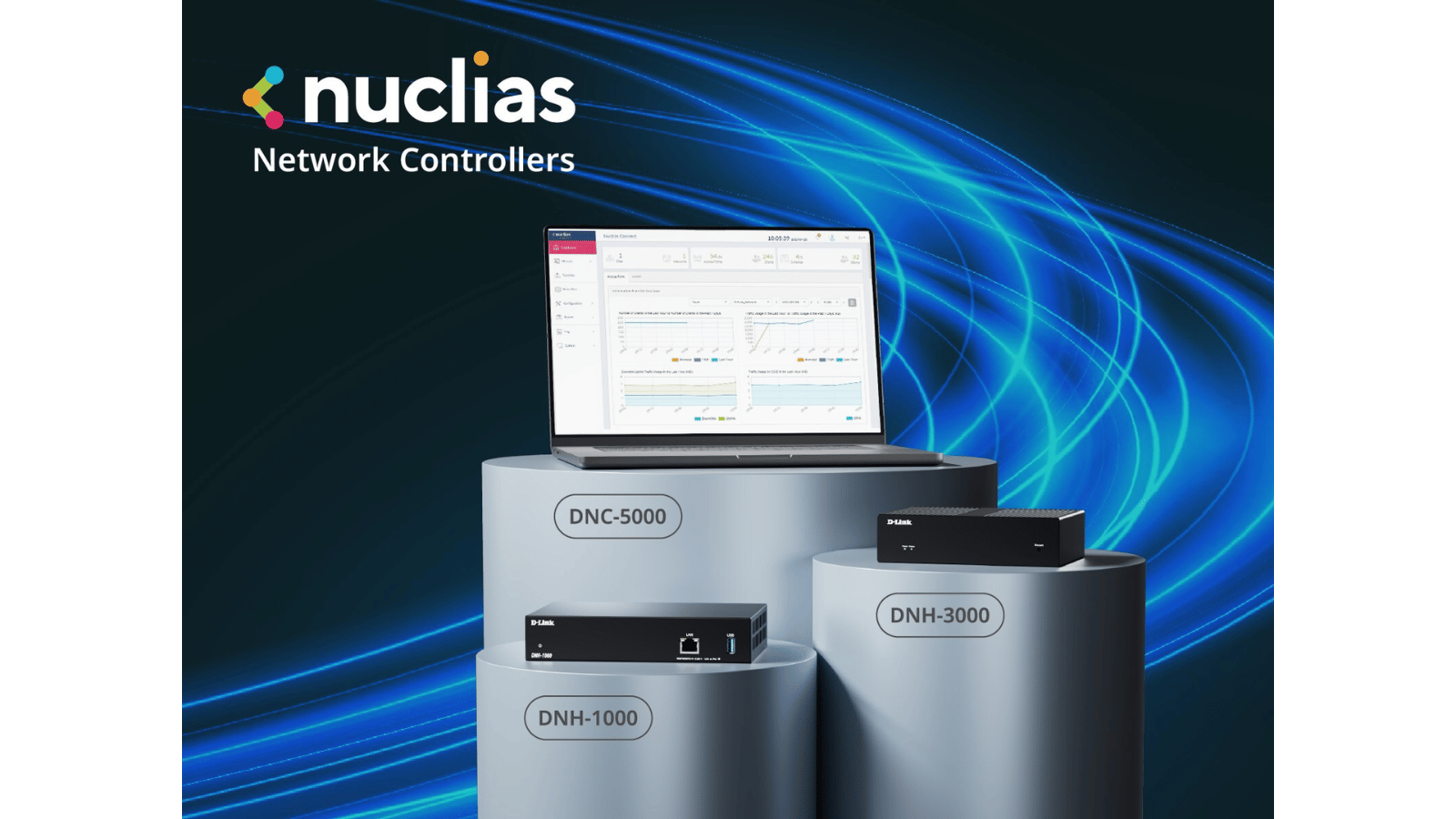
D-Link unveils its next-generation Nuclias Network Controllers including the DNH-1000, DNH-3000, and DNC-5000 software for unified multi-site management.
The D-Link Nuclias Network Controller platform entered a major international commercialization cycle as telecommunications equipment leader D-Link Corporation officially unveiled its next-generation unified network management suite. The launch features three distinct enterprise controller models: the entry-level DNH-1000 hardware unit, the high-capacity DNH-3000 hardware appliance, and the enterprise-grade DNC-5000 software orchestration controller. By consolidating core, aggregation, and edge layer operations into a standardized administrative panel, the Taiwanese hardware manufacturer intends to help mid-market enterprises and multinational organizations eliminate the system fragmentation and security exposure risks associated with highly distributed wireless footprints.
The corporate strategy behind the multi-tier platform rollout targets the escalating operational overhead and security blind spots that complicate traditional multi-site enterprise networking. Modern commercial properties, educational campuses, and retail franchises routinely maintain thousands of independent wireless access points and switching units across disconnected branches, forcing corporate IT groups to operate across separate, siloed configuration utilities. Transitioning to a single pane of glass infrastructure layer allows lean information technology teams to push batch configuration policies, execute remote firmware upgrades, and administer secure role-based permissions without expanding localized administrative headcount.
The underlying technology framework balances wired and wireless traffic routing by utilizing a unified graphical management interface capable of processing real-time telemetry data across extensive network sharding boundaries. The hardwired controller variants (DNH-1000 and DNH-3000) are engineered with high-throughput physical backplanes—including dedicated 2.5G copper connections and dual 10G SFP+ fiber ports—to capture and index detailed traffic metrics without introducing systemic packet latency. Concurrently, the flagship software controller (DNC-5000) operates as a virtualized management image optimized for Windows or Linux environments, granting enterprise deployment teams total structural agility to scale operations up to 2,000 active endpoints.
Centralizing Corporate Topologies via the Nuclias Controller Architecture
The deployment of the updated Nuclias ecosystem reflects an ongoing structural evolution within the commercial enterprise communications market, where corporate networks transition away from complex standalone physical command line modifications toward centralized, software-defined control planes. The platform introduces a specialized Auto RF management layer that dynamically tracks real-time signal degradation and channel overlap across dense device environments. The system automatically modifies localized channel allocations and signal power outputs based on live interference trends, sustaining continuous, stable connectivity across multi-tenant corporate office layouts.
Enterprise technology procurement directors and infrastructure systems engineers track these central management layers to protect long-term capital deployments and enforce strict information security policies across remote branch offices. When a large-scale commercial retail chain or university campus deploys separate, non-unified network equipment, a lack of unified access governance can lead to persistent configuration drift and exposure to illegal DHCP server injections. Implementing integrated network control layers ensures that administrators can administer uniform 802.1X access policies, isolate multi-SSID guest pools, and deploy captive authentication portals predictably.
Administrative Data Isolation: The Nuclias on-premises software architecture processes critical control and management operations entirely within local enterprise environments, insulating internal configuration telemetry and identity verification pathways from external third-party cloud vulnerabilities.
The data parsing frameworks provide deep real-time traffic reporting and bottleneck analytics to trace unexpected bandwidth spikes and isolate faulty switches across the entire network fabric. The internal monitoring systems deploy automated anomaly-detection alerts that notify network engineering teams the moment a specific hardware node registers elevated error rates, dropouts, or power-over-Ethernet (PoE) budget depletion thresholds. This rapid tracking capability enables corporate IT administrators to execute precision remote port control adjustments, optimizing quality-of-service (QoS) parameters before network sluggishness compromises frontline business operations.
Streamlining Site Deployment through the Nuclias Connect Ecosystem
The operational onboarding of distributed multi-site network infrastructure leverages the free-to-download Nuclias Connect software application layer, which provides remote deployment tooling across standard tablets and mobile interfaces. The application allows field technicians to complete initial physical equipment setups instantly, automatically downloading pre-validated corporate configuration templates the moment a new switch or access point joins the enterprise subnet. This rapid hardware provisioning model removes the requirement for specialized on-site network engineering personnel during office expansions, reducing initial deployment costs.
Securing Long-Term Asset Integrity via Localized Hardware Sourcing
The long-term commercial viability of multi-site corporate communications networks will ultimately rely on how successfully equipment manufacturers can deliver high-capacity throughput features while meeting rigorous international data privacy and reliability standards. Industry analysts recognize that modern enterprises increasingly prioritize “Made in Taiwan” manufacturing pipelines to safeguard critical physical components and guarantee verifiable product quality lifecycles. The systematic introduction of the next-generation Nuclias Network Controller portfolio establishes a calculated industry architecture, demonstrating a unified framework where physical processing density and software-defined network monitoring combine to protect enterprise data workflows at scale.