Ampera Integrated Energy Architecture Launch Details
Ampera introduces its Integrated Energy Architecture, an intelligent platform delivering high-efficiency power today and advanced microreactor support next.
The Ampera Integrated Energy Architecture entered commercial distribution on Friday as industrial power systems manufacturer Ampera introduced a unified thermal energy conversion platform engineered to deliver immediate local electrical generation while establishing a direct mechanical bridge to next-generation nuclear power. Launched under the company’s “Power Now. Nuclear Next” operational initiative, the modular hardware framework leverages a shared power conversion loop capable of harvesting multiple disparate heat sources concurrently. By enabling data center operators, heavy industrial complexes, national defense installations, and maritime vessels to utilize conventional fuels today and integrate factory-built microreactors later, the company intends to de-risk long-term capital investments in high-density energy infrastructure.
The corporate strategy behind the dual-stage deployment model addresses the acute electrical supply constraints currently restricting the expansion of large-scale artificial intelligence data centers and advanced manufacturing hubs. Because building traditional localized utility substations or permitting permanent grid connections frequently requires multiple years of administrative delay, high-growth technology sectors require high-efficiency on-site generation to scale active server portfolios immediately. Utilizing a standardized thermal blueprint allows energy buyers to deploy self-contained 30-megawatt baseline blocks rapidly, insulating localized operations from municipal electrical grid shortfalls and regional energy price volatility.
The underlying engineering framework relies on a highly flexible thermodynamic cycle optimized to reclaim low-grade and high-grade thermal energy efficiently from multiple inputs. In its initial configuration, the system captures waste heat recovery pipelines directly from industrial exhausts or data center cooling towers, translating otherwise lost energy back into usable electricity. To provide stable base-load capacity, the centralized conversion blocks pair with highly scalable conventional fuel modules, utilizing localized natural gas lines to maintain continuous generator synchronization during high-load manufacturing cycles.
Orchestrating Modular Power Nodes via the Ampera Integrated Energy Architecture
The adoption of the Ampera Integrated Energy Architecture reflects an ongoing structural transition within the global industrial power sector, where energy infrastructure evolves from centralized, single-source utility setups toward decentralized, platform-based generation networks. The flagship architecture is engineered from the ground up to support the late-stage physical integration of the company’s proprietary factory-built subcritical microreactors. Supplying industrial facilities with a pre-engineered conversion core ensures that transitioning a localized facility from traditional natural gas combustion to absolute carbon-free nuclear generation does not require rebuilding the entire plant infrastructure.
Enterprise infrastructure analysts and corporate risk officers track these multi-fuel modular transitions to protect massive real estate investments against future carbon legislation and erratic fuel markets. When a multinational manufacturing network relies entirely on static, single-fuel generation assets, shifting regional environmental compliance mandates can render heavy capital investments obsolete prematurely. Implementing adaptable power configurations enables corporate planners to secure reliable baseline power today while establishing a clear, predictable transition pathway to clean nuclear energy as localized subcritical reactor modules complete commercial scaling phases.
The data routing and performance optimization pathways utilize an advanced artificial intelligence network branded as the NeuralTwin framework to manage real-time operational safety parameters across all active deployments. Traditional industrial generators operate on fixed thermodynamic baselines, requiring manual intervention to adapt internal flow rates when fuel inputs or ambient temperatures fluctuate. The specialized digital twin software continuously analyzes thousands of local structural sensor points, deploying predictive algorithms to optimize internal pressure profiles and track component degradation factors before failures occur.
Streamlining Late-Stage Commisioning via Advanced Modular Manufacturing
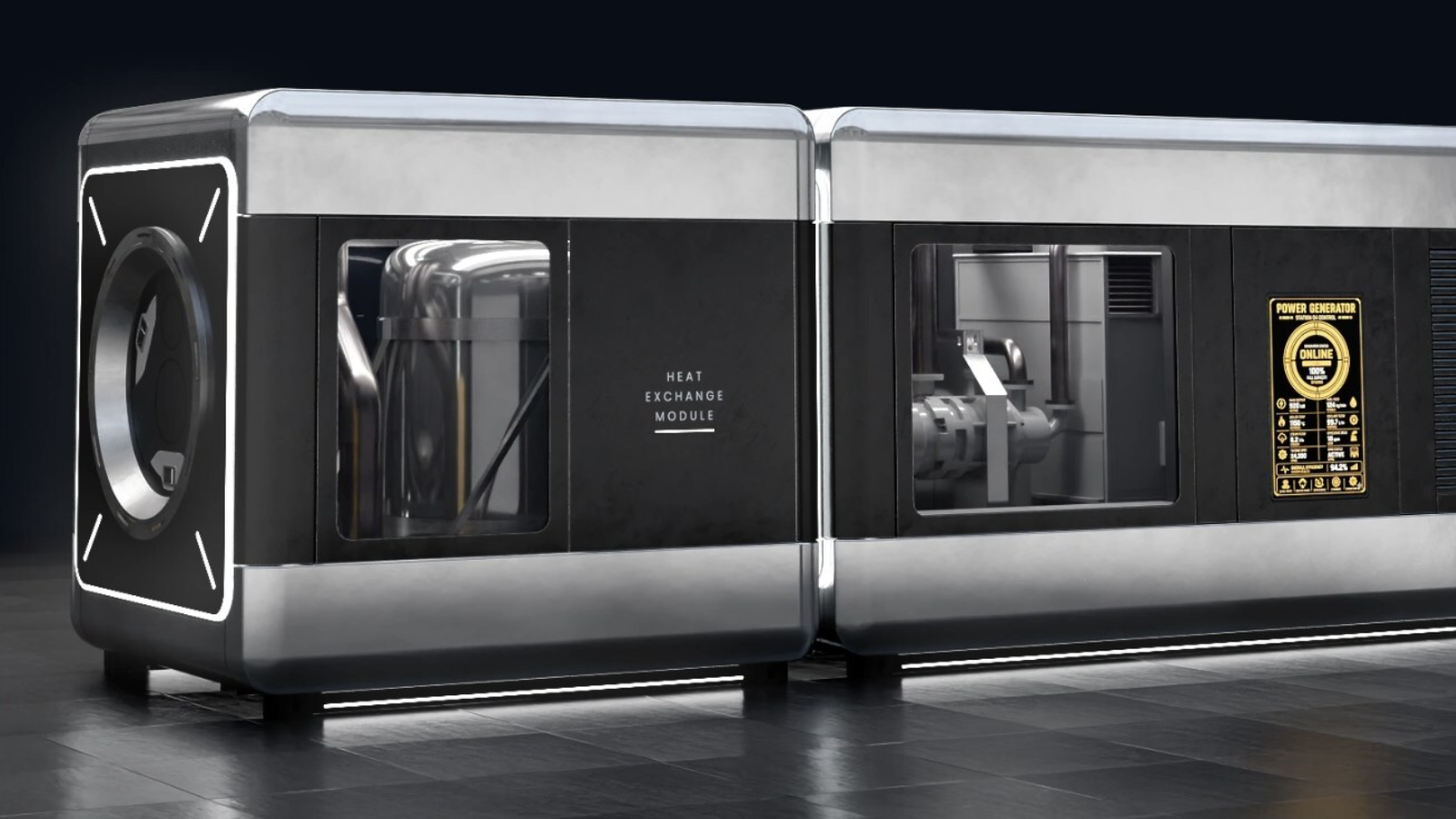
The physical assembly of these heavy industrial generation clusters relies on advanced modular manufacturing techniques to minimize unpredictable field engineering variables in regional deployment zones. Because the structural frame, heat exchange manifolds, and power electronics are pre-packaged and verified within a centralized factory environment prior to shipping, on-site construction crews can complete installation steps with significantly reduced labor hours. This standardized manufacturing model reduces field assembly errors, lowering development expenses while protecting the target customer deployment window.
Securing Autonomous Operation Controls inside Distributed Nuclear Nodes
The long-term commercial viability of factory-built subcritical energy systems depends heavily on their capacity to maintain absolute operational safety without requiring continuous on-site specialized engineering support. The microreactor technology layer is engineered to run for multiple decades autonomously without demanding localized refueling sequences, relying instead on a completely sealed, walk-away safe structural core. This enclosed passive safety design prevents thermal runaway scenarios naturally, helping industrial facilities operate high-density, localized carbon-free nuclear generators safely while remaining fully aligned with strict national nuclear regulatory frameworks.
The broader international technology community views the transition toward automated, multi-source industrial energy platforms as a mandatory progression to fulfill the massive energy requirements of next-generation automation infrastructure. As advanced compute clusters and heavy automated machinery place unprecedented stress on aging regional utility networks, industrial operators must secure independent, self-healing power nodes to protect operational continuity. The global rollout of the integrated energy architecture establishes a clear blueprint for how modern multinational corporations can bridge immediate fossil-fueled infrastructure with a future of decentralized, abundant clean nuclear energy.