AI Is a Marketing Term’: Felix Riley on Why the Human Edge Will Matter More
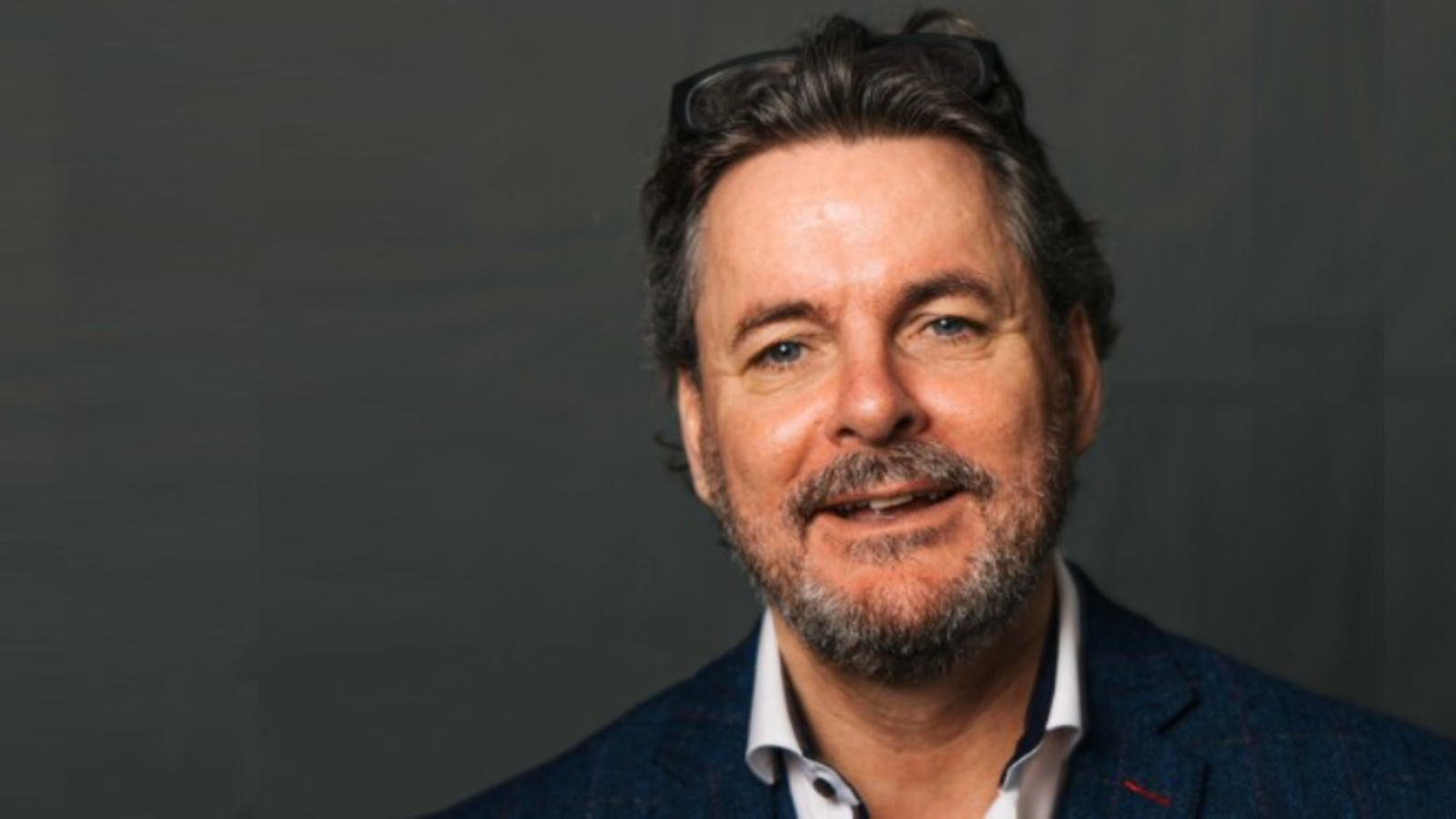
Felix Riley is a keynote speaker, author and Moonshot Strategist whose career has moved through comedy, finance, entrepreneurship and corporate leadership. A former BBC comedy writer, Felix later founded ChoiceOdds, sold the company to MF Global and joined the organisation as Managing Director and a member of its Global Executive.
His experience spans trading floors, boardrooms, business turnarounds and international negotiations. Felix has spent more than a decade advising leaders on ambitious growth, decision-making and the limiting beliefs that prevent capable teams from thinking at scale. He is also the Penguin-published author of The Set Up and The Inside Job.
In this exclusive interview with the Motivational Speakers Agency, Felix explains why failure should be treated as data, how global organisations can overcome cultural silos, where human value will grow as AI develops, and why creativity is central to breaking restrictive patterns of thought.
Question 1. How does treating failure as information, rather than a reflection of identity, change the way people approach growth and performance?
Felix Riley: “The entire attitude towards experience changes in a positive way.
“Most of life involves failing. When you pick up a guitar for the first time, you fail for weeks or months before you can strum a tune. Watch a child learn to walk. They fail repeatedly before they succeed.
“We treat failure as something bad. I have two grown-up daughters, and I told them that the definition of failure is not trying. If you try, you have not failed. You are already a success in my book.
“Once we try and enter the race, we may not succeed by the measure we have set ourselves or that others have set for us. That is data.
“You learn from it and try again more effectively. You may also realise that you should not be doing it and choose another direction.
“Nelson Mandela said, “I never fail. I either win or I learn.” That is my attitude towards failure.”
Question 2. Why do national and functional silos emerge so readily in global organisations, and how can leaders create unity without erasing cultural difference?
Felix Riley: “We do not realise how heavily our environment influences us.
“I grew up on a council estate where expectations were culturally low. Most of my friends went on to have modest careers. Some ended up in prison, and some died.
“Compare that with growing up in an affluent area where everyone attends private school, families have money and parents have successful careers. Children in that environment grow up expecting to have strong careers.
“Those children have very different starting points in life.
“You can understand that difference within Britain through the contrast between rich and poor, but the same principle applies around the world.
“I worked in copper mining in Zambia, where many people I met had a simple priority: enough money to put food on the table and the freedom to take Friday night off.
“In a global organisation, we have to celebrate those differences and learn from each other. We also need a common language that brings the company together.
“Someone can celebrate being Danish, Norwegian or Zambian and keep that identity alive within their part of the company. At the same time, everyone needs to recognise that they are a benefit to one another.
“Differences should be treated as strengths.”
Question 3. As AI automates more routine work, which distinctly human capabilities will become more valuable?
Felix Riley: “AI will eventually prove exciting, but much of the current discussion is hype.
“It is not artificial intelligence. It is machine learning. AI is a marketing term.
“Large language models have peaked. We are now moving into the application stage, where the tools built on top of those engines will become increasingly useful.
“A lot of repetitive work will disappear. I do not believe AI will take everyone’s jobs, although many companies will mistakenly try to use it that way.
“Certain tasks will be removed, which should free people to use the human edge. What people want is other humans.
“If I go into a law firm, I am happy for a strong AI system to handle documentation and communication in the background.
“What I want is a person who is smart, can think creatively and innovatively about my problem, and can give me the confidence to navigate the ambiguity of the legal process.
“The less routine work we have to do, the more freedom we have to be human.
“The smartest companies and law firms are already recognising that they need to strengthen people’s human skills because those capabilities will become central in the future.”
Question 4. What lasting change do you want audiences to make after hearing you speak?
Felix Riley: “I want them to change.
“I began delivering my talk, The Flea Jar, as a passionate response to what I was seeing in the workplace.
“I have worked as a moonshot strategist for more than a decade, helping businesses pursue highly ambitious goals. I kept seeing very intelligent people thinking much smaller than they needed to, and I became obsessed with understanding why.
“I realised that cognitive biases and limiting beliefs were holding them back.
“Simply telling someone that they are suffering from a cognitive bias does not work. People become defensive. You have to approach it from a different angle.
“That brings us back to storytelling. Stories can show people how to move beyond those beliefs.
“Creativity is the way out. Innovative thinking can liberate people to think on a much larger scale.
“When I speak at companies, the keynote is followed by a workshop. People produce fantastic ideas because something has changed in the way they think.
“I want people to leave with greater belief in themselves, greater belief in their organisations and greater confidence in what they can achieve together.”
This exclusive interview with Felix Riley was conducted by Tabish Ali of the Motivational Speakers Agency.