
Famous Movie Plot Holes That Common Sense Would Fix Fast
Cinematic narratives frequently rely on characters completely ignoring basic common sense and modern consumer technology.
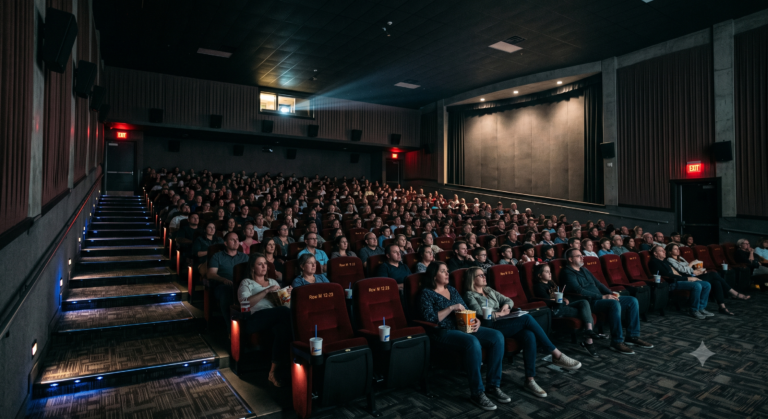
We have all spent two hours sitting in a dark theater actively suspending our disbelief while a narrative engine chugs along on pure contrivance. Hollywood relies heavily on a unspoken agreement with the audience, which is that we will ignore glaring lapses in logic for the sake of entertainment. However, when you look at certain famous movie plot holes, it becomes glaringly obvious that a single rational choice would trigger the end credits before the audience finishes their first handful of popcorn. If cinematic universes operated with a shred of real world pragmatism, some of our most beloved multi million dollar franchises would collapse into a five minute short film.
The Missing Cell Phone Signal in The Dark Knight Rises
Christopher Nolan has built a stellar reputation on creating airtight, hyper realistic worlds, which makes the narrative oversight in his third superhero outing particularly jarring. When evaluating famous movie plot holes, the entire second act of this Gotham epic hinges on a massive tactical blunder by the police department. The villain Bane manages to trap nearly the entire municipal police force, numbering thousands of officers, beneath the city streets by detonating explosives across the sewer network. For months, these officers remain underground while the city above descends into complete anarchic chaos.
This entire multi month imprisonment falls apart under basic telecommunications reality. The subterranean tunnels of a major metropolis are not completely isolated from the modern world, as they are packed with fiber optic cables, maintenance repeaters, and transit communication infrastructure. A single officer down in those tunnels would have possessed a standard issue encryption radio, a personal mobile device, or access to an emergency landline phone station. Instead of wandering around in the dark waiting for Batman to fly back from a distant foreign prison, a sensible captain would have used a mobile device to coordinate a targeted breakout with federal authorities within thirty seconds of the blast.
The Unchecked Security Cameras of the InGen Lab in Jurassic Park
Steven Spielberg crafted a masterpiece of suspense, but the operational security of his prehistoric theme park would have gotten any real world systems administrator fired instantly. Among the most frustrating famous movie plot holes is the complete reliance on a single rogue employee to run the entire digital infrastructure. Dennis Nedry shuts down the security systems to steal dinosaur embryos, causing the electric fences to fail and letting the prehistoric predators escape into the park.
A multi billion dollar biotechnology enterprise backed by global venture capital would never operate its critical life safety systems on a single point of failure. The moment Nedry turned off the automated tracking grids, redundant off site monitoring centers in Costa Rica or the United States would have flagged the massive data drop. Industrial networks require decentralized oversight, meaning an independent safety override would have locked down the embryonic storage unit and alerted the mainland security teams. Instead of a chaotic island wide hunt involving velociraptors, automated backup generators would have engaged, keeping the fences live and trapping Nedry at the docks within five minutes.
Why Fixing Narrative Overisights Matters to Modern Content Consumers
Deconstructing these narrative leaps is not just a pedantic exercise for internet forums, it carries significant value for studios, streaming platforms, and contemporary scriptwriters. Audiences today are highly literate in technology, systems design, and corporate mechanics, meaning they notice lazy writing much faster than previous generations. When a plot relies on a character forgetting they own a smartphone or a security system lacking basic automated redundancy, it breaks the viewer immersion entirely.
For the entertainment industry, investing in narrative continuity and logical consistency is a direct protection of brand equity. A franchise that treats its audience with intellectual respect builds deeper long term engagement, driving merchandise sales, spin offs, and recurring subscription revenue. Writers who construct puzzles that cannot be solved by a simple Google search create tension that feels earned rather than forced. Stripping away artificial ignorance forces characters to make cleverer choices, which ultimately results in far more gripping and authentic storytelling.
The Digital Erasure of Serendipitous Misunderstanding
The current media ecosystem is saturated with stories that struggle to exist alongside modern hyper connectivity. In the past, classic films relied on the physical friction of missed connections, lost letters, and geographical isolation to build dramatic stakes. Today, global positioning satellites, instant messaging, and cloud computing have systematically eliminated the logistical gaps that once allowed complex misunderstandings to fester over a two hour runtime.
Contemporary filmmakers are forced to invent increasingly convoluted excuses to separate characters from their data networks, creating an entire subgenre of stories where devices mysteriously lose battery power or plunge into rivers. This structural tension highlights a larger cultural shift, which is that our real world has become so optimized that cinematic chaos must be manually manufactured. The persistent charm of looking back at these famous movie plot holes is that they remind us of the fragile, human architecture underneath even the most complex mechanical spectacles.