Guild Wars 3 Announced for PC and PlayStation 5
ArenaNet has officially announced Guild Wars 3 for PC and PlayStation 5, marking the franchise’s first expansion into the home console market.
Software developer ArenaNet has announced Guild Wars 3 as the next major entry in its long running online role playing franchise during an industry exhibition at Summer Game Fest. The upcoming fantasy title is being engineered for global distribution across PC, Steam, and PlayStation 5, representing the first time the historically computer-centric series will debut on a dedicated home console. The project marks the studio first entirely new game development initiative since the launch of its previous mainline sequel fourteen years ago.
The multi platform release strategy targets a significant addressable market of console enthusiasts who have traditionally been excluded from the franchise ecosystem. To support this expanded demographic, the design team is building a combat model structured to operate uniformly across standard game controllers and mechanical keyboards. Initial external testing phases are scheduled to begin during the autumn of the coming year, with additional details regarding business distribution models and software pricing tiers expected to emerge over the next several months.
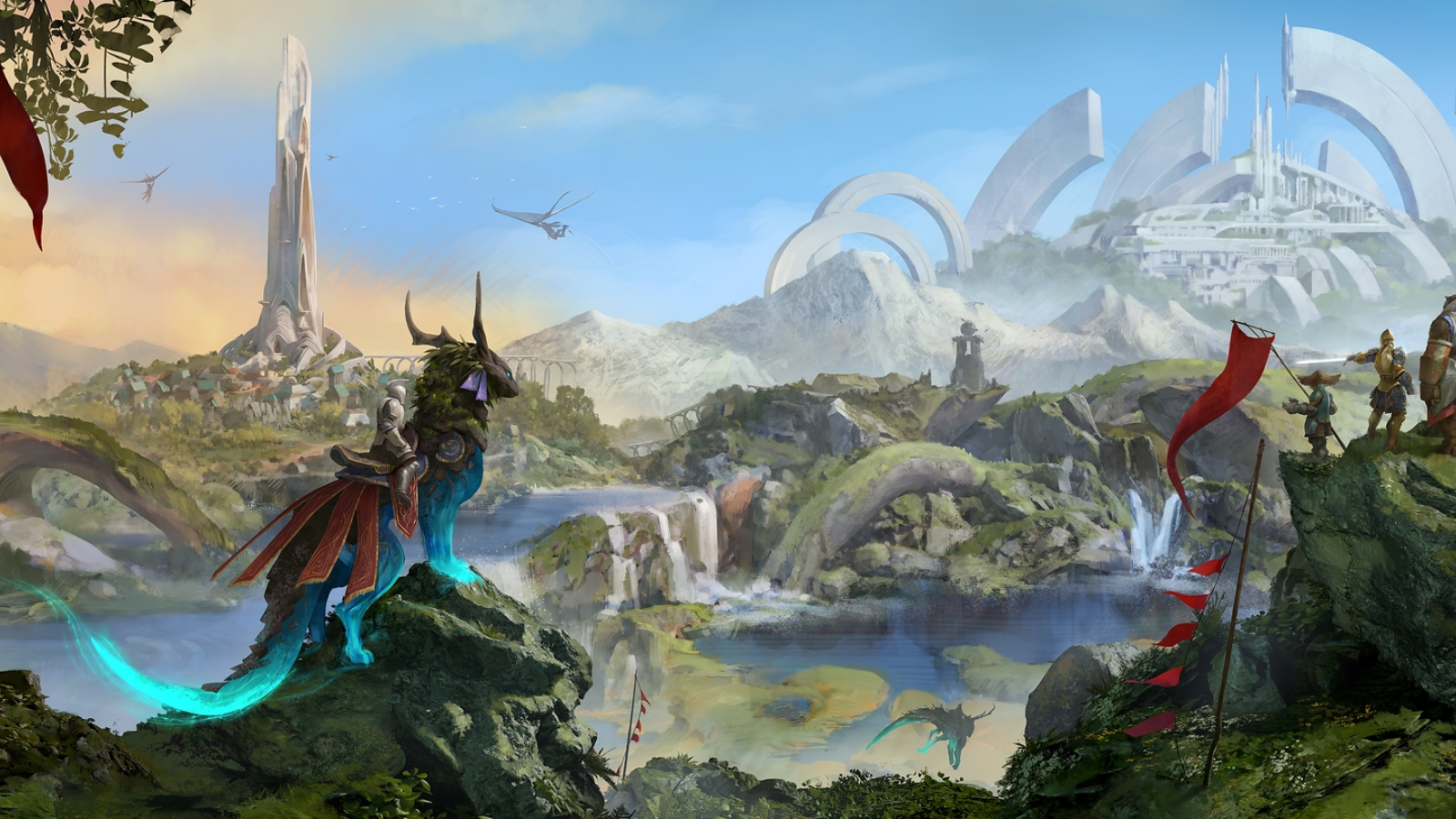
The narrative architecture of the title serves as a historical prequel, shifting the virtual timeline one thousand years prior to the events of the original 2005 release. Players enter a wilderness territory known as Orr, where localized groups are engaged in systemic conflicts over the extraction and preservation of environmental resources. The technical framework utilizes dynamic movement tracking to alter physical combat engagement, allowing players to translate transit speed and directional momentum directly into increased offensive impact during virtual encounters.
Guild Wars 3 Introduces Cross Platform Architecture
The structural design of the software relies on a distributed server framework that can accommodate thousands of concurrent users simultaneously across different gaming devices. Unlike historical massively multiplayer online titles that segregated player bases depending on their hardware choices, the new infrastructure aims to facilitate unified communication channels and shared progression queues. This architectural unification allows console operators to interact directly with computer users within the same persistent environments.
The game design establishes a specialized class system where participants assume the role of wilderness guardians tasked with managing relationships between regional populations and native environmental entities. The primary exploration mechanic incorporates a specialized traveling partner known as the Seeker, which functions as both an interactive companion and a mobile transit mechanism across the large scale terrain. This approach replaces static teleportation points with active, physical traversal systems designed to emphasize spatial navigation within the virtual landscape.
Engineering Real Time Interactions in Massively Multiplayer Environments
Achieving parity between diverse hardware profiles requires substantial optimization at the game engine level to handle high volume particle effects and character assets without degrading performance. Console architectures possess specialized memory layouts that differ fundamentally from standard desktop systems, requiring modular rendering pipelines that can scale graphic fidelity dynamically. The engineering studio is optimizing its network replication code to minimize latency spikes during large scale competitive engagements where hundreds of players occupy the same localized zone.
By adopting a hardware agnostic production methodology, the development team intends to eliminate the input delays that frequently complicate console adaptations of complex computer software. The user interface has been entirely redesigned to replace traditional mouse-driven menus with radial selection matrices that can be navigated rapidly using analog sticks. This systemic layout ensures that macro level management and skill adjustments remain intuitive regardless of the choice of input peripheral.
Online Entertainment and Interactive Software Market Context
The formal unveiling of Guild Wars 3 arrives during a period of shifting monetization trends and rising production costs within the online entertainment industry. The multiplayer role playing market has historically been dominated by mandatory monthly subscription models and aggressive in-game purchasing frameworks that frequently alienate cost conscious consumers. The franchise has traditionally maintained a buy-to-play structure that avoids ongoing access fees, an approach that helped the intellectual property attract over twenty-nine million lifetime participants across its operational history.
For interactive entertainment publishers and digital distribution platforms, the expansion of high budget online properties onto console ecosystems reflects a broader effort to diversify revenue streams amid slowing desktop market growth. Building persistent virtual worlds requires massive initial capital expenditure and multi year development cycles, making cross platform availability vital for mitigating financial risk. By establishing a presence on both the PlayStation Network and the Steam distribution platform simultaneously, the enterprise can tap into pre existing community networks to accelerate initial player onboarding metrics.
The long term market performance of the property will depend on the capability of the developers to sustain a reliable content pipeline following the initial commercial launch. Massively multiplayer environments require continuous software updates, security patches, and structural expansions to retain active user bases over multi year cycles. Implementing a standardized development framework that supports automated balance adjustments and rapid content deployment allows the production studio to address community feedback efficiently, establishing a stable operational foundation as the title prepares for its public testing phases.
Source: PR Newswire