BLAZE E-Commerce API Launches to Grant Cannabis Retailers Total Storefront Control
Cannabis retail technology provider BLAZE has officially introduced the BLAZE E-Commerce API, delivering a dedicated headless commerce architecture engineered to give licensed dispensaries and multi-state operators unrestricted creative control over their digital consumer touchpoints.
News About BLAZE E-Commerce API
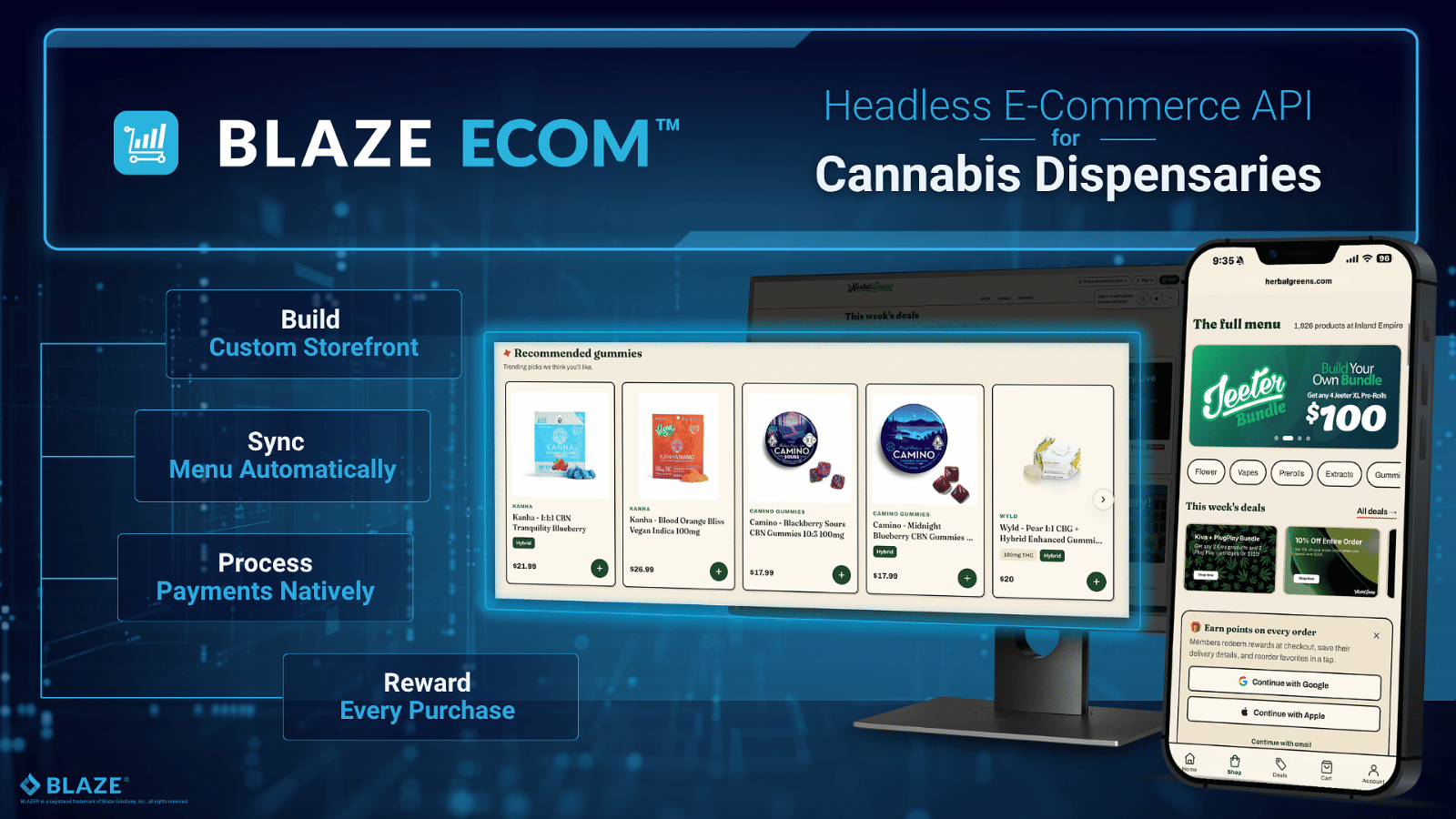
Los Angeles-based retail software provider BLAZE announced the commercial availability of the BLAZE E-Commerce API. The new headless commerce framework provides software engineers and marketing agencies with direct programmatic access to core product catalogs, shopping carts, order pipelines, and regulatory compliance data. This architecture allows operators to design bespoke web storefronts, native mobile applications, and interactive in-store ordering kiosks.
The programming interface integrates directly with the company’s flagship BLAZE Retail POS platform. This continuous synchronization ensures that inventory levels, dynamic pricing structures, customer profiles, and state-mandated traceability rules remain aligned across physical dispensary counters and digital ordering channels without requiring manual maintenance.
To streamline developer adoption, BLAZE structured its technical documentation with a machine-readable specification designed specifically for artificial intelligence coding assistants. Development teams can instruct AI code generators to scaffold production-ready frontend components directly against live endpoints, drastically reducing initial setup time. The launch is led by Chief Executive Officer Chris Violas and includes onboarding services for search engine optimization preservation, catalog data migration, and zero-downtime platform transitions.
Significance of BLAZE E-Commerce API
The release of the BLAZE E-Commerce API is highly significant for the regulated cannabis industry because traditional dispensary websites rely heavily on standardized, third-party iframe menus and aggregated marketplace listings. These legacy formats often look identical across competitors, strip away brand identity, and weaken organic search engine visibility because product catalogs are hosted within embedded frames rather than native website code.
Decoupling the frontend presentation layer from backend transactional databases resolves these constraints, allowing multi-state operators to build differentiated user interfaces tailored to their unique brand aesthetics. Operators can run custom promotional campaigns, test modern user journeys, and optimize site speed without jeopardizing complex backend compliance reporting.
Furthermore, publishing an agent-readable API specification addresses common software engineering bottlenecks within the cannabis vertical. Regulated retail operators often lack the engineering resources of mainstream enterprise retailers. Allowing small teams and boutique creative agencies to deploy AI assistants to generate boilerplate integration code levels the technical playing field, enabling faster digital rollouts while maintaining rigorous compliance with state cannabis regulations.
Next Steps for BLAZE E-Commerce API
Following the official rollout, BLAZE is onboarding initial dispensary brands and digital marketing agencies through its dedicated developer portal and demonstration channels. Technical support teams will assist early adopters with historical data migration and existing search ranking preservation.
Looking ahead, BLAZE plans to expand its library of agentic development tools and release pre-built starter templates for modern frontend frameworks. The enterprise will continue integrating new compliance modules to ensure seamless alignment as cannabis retail regulations evolve across state and national markets.